Ridiculous Fashion From Late 70s Early 80s What Brand of Shoes Was in in the Late 70s
Even the most stylish folks make a sartorial skid-upward now and again. Yet, there are some manner trends that are non merely so bad, merely so pervasive, that they've become iconic in their own right. Some of the worst mode trends out there, from the leisure suits of the '70s to the light-up sneakers of the 1990s, are so ridiculous by today's standards that we can't help simply laugh—and wonder what nosotros were thinking.
Take a trip down memory lane every bit we recall the worst fashion trend from the year you were built-in, starting back in 1940. And for more nail from the past style, This Is the "Information technology" Hairstyle the Twelvemonth You Were Born.
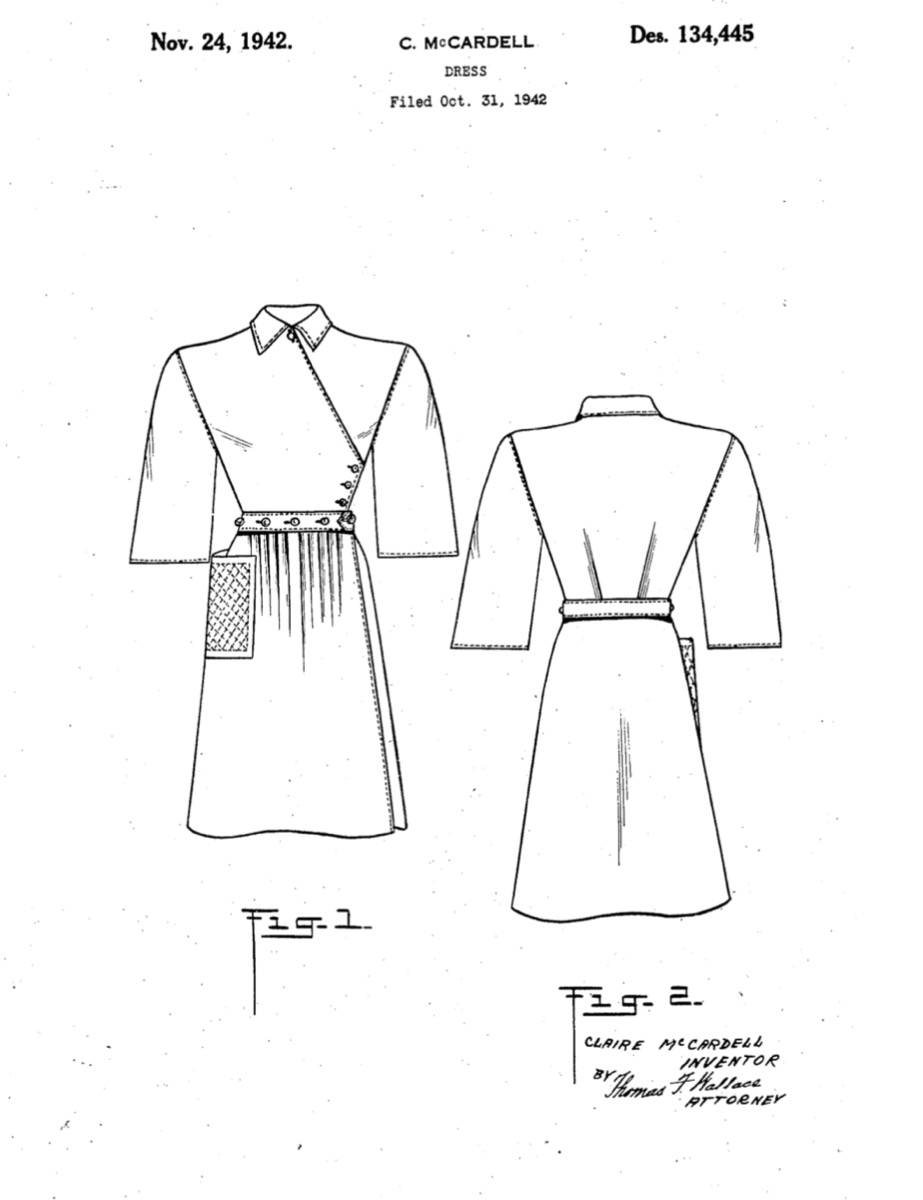
By 1940, both England and France had entered Globe War II, which made way for American designers to boss the wardrobes of the earth. Some, including Claire McCardell, helped to fill the void of new designs coming out of Paris; in the early on 1940s, she introduced the popover dress. Originally meant as a ready-to-article of clothing utility garment, this wrap clothes became a go-fashion staple across the state. What makes it so ridiculous, you ask? Well, every $vii dress was sold with an oven mitt that attached via button, according to an exhibit at the Metropolitan Museum of Art. And for more than fun retro way, check out these Manner Trends Only Cool '90s Kids Will Remember.
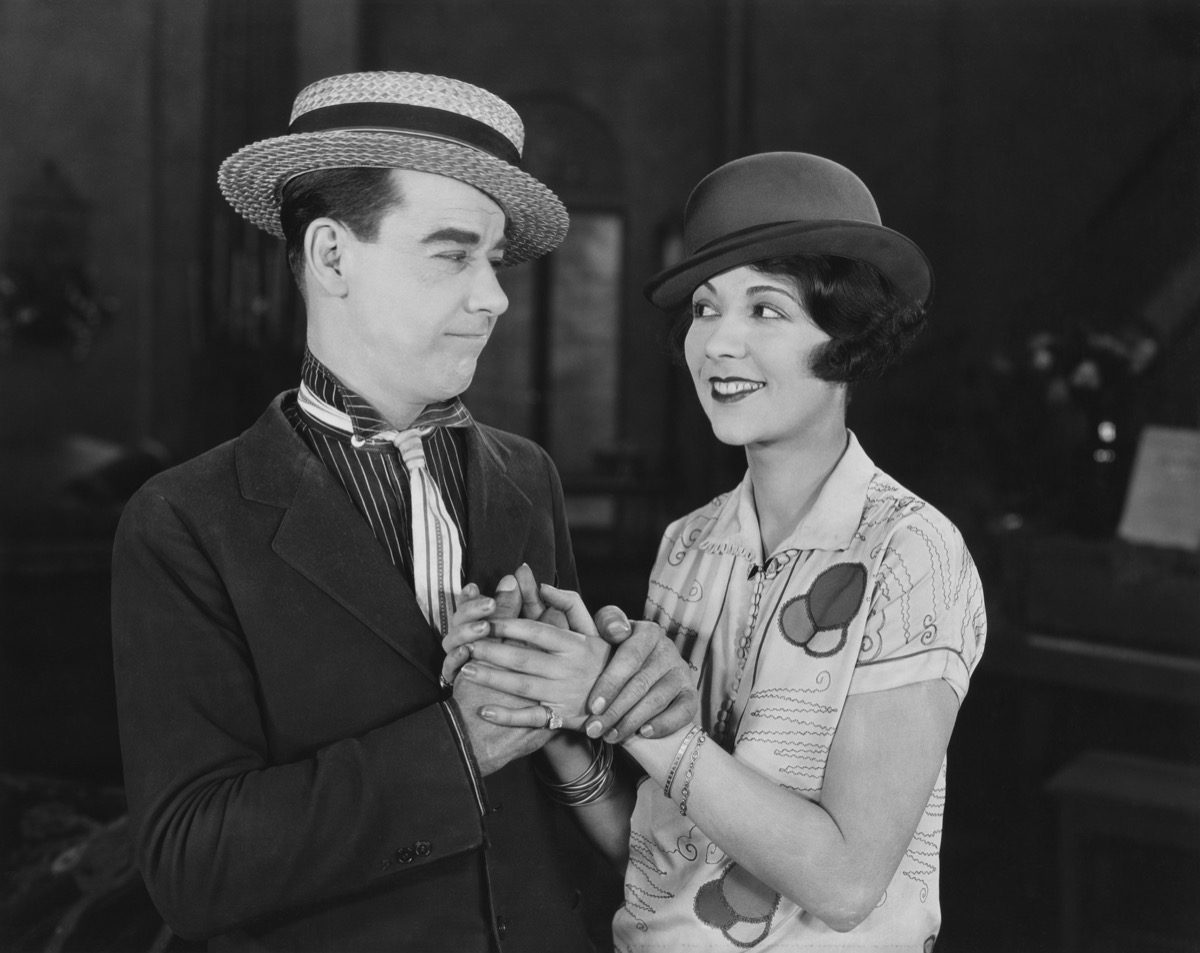
In the early 1940s, bowler hats—which were already wildly popular with men—were downsized for feminine sensibilities. The result? Miniaturized bowler hats that women would article of clothing beveled. It'due south a trend that Faddy noted, in 1941, was "definitely not for the unselfconfident." Basically, it was a more polite mode of saying few could pull this off and thank goodness more didn't try. In their look back at embarrassing style trends over the years, Harper's Bazaar deemed it one of the worst of the 1940s, adding, "Miniature hats flatter very few heads."
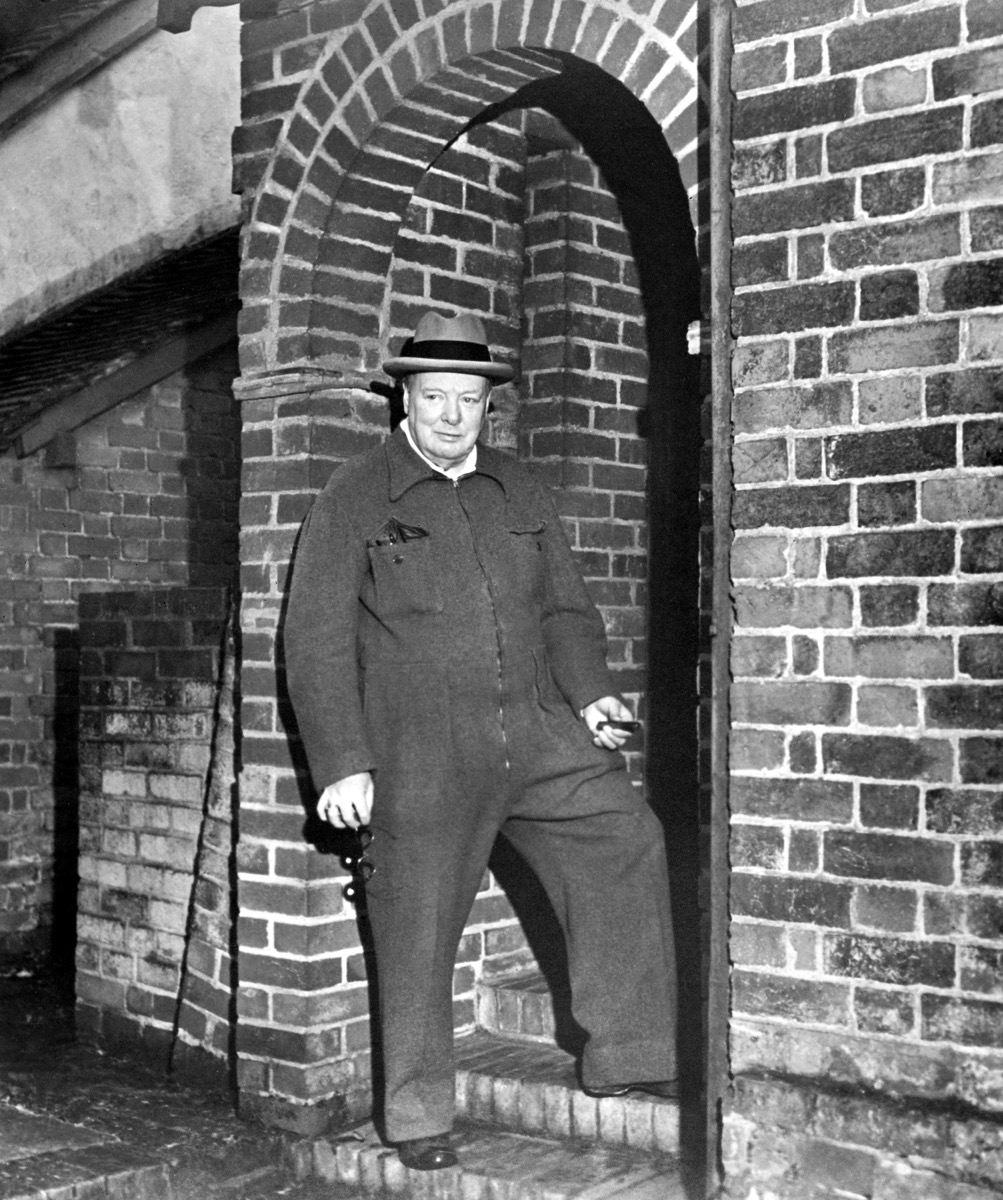
Globe War Ii had a huge affect on mode, largely because of textile rationing. For the most part, garments were designed with that in mind. But safety played a major function, too. Enter: the siren suit, a unmarried-piece garment that was designed to exist worn over article of clothing or pajamas, then you could just throw it on and run to the nearest air raid shelter. Suits were designed for both men and women, and Winston Churchill (pictured here) was one of the style's biggest fans. The practicality is, of form, understandable. The fact that information technology was marketed as haute couture? Less and so. And for more mode news delivered to your inbox, sign upwardly for our daily newsletter.
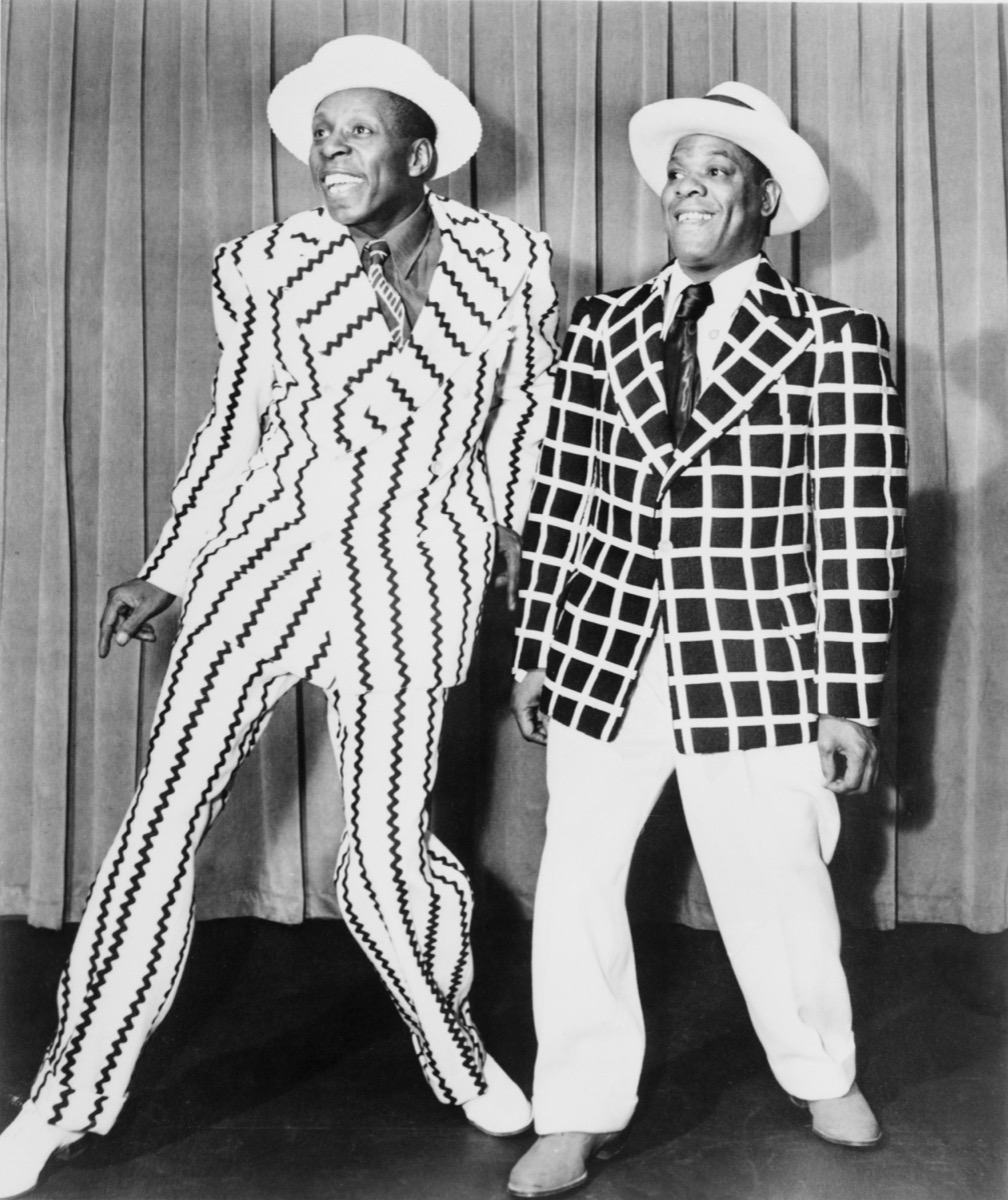
The zoot suit was a amorphous, oversized ensemble that fabricated whatsoever homo who wore one await similar he was draped in, well, drapes. (Traditionally, zoot suits were made past buying a adjust that was several sizes likewise big and so tailoring it to fit.)
And the zoot suit was not without controversy. Equally reported by Smithsonian magazine, in June 1943, white U.S. armed forces personnel spent a calendar week assaulting "unpatriotic" men in Los Angeles who championed this trend. The ostensible reason for this spate of violence was to punish those who went confronting wartime rationing, but the majority of the victims were Mexican-American men. The riots didn't dampen the style'due south popularity, notwithstanding; it rose through the rest of the decade, before fading into obscurity in the 1950s.
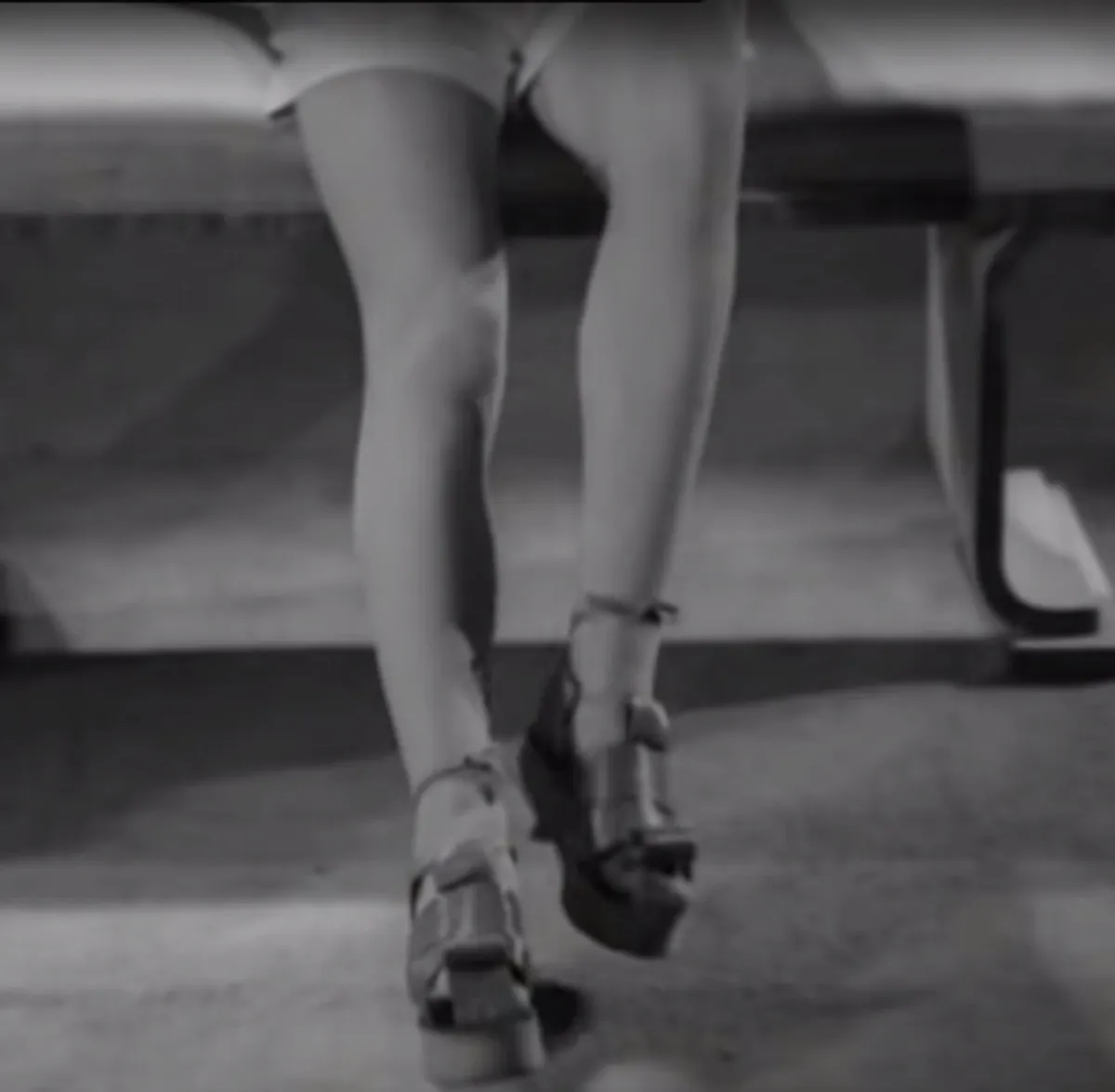
Wearing makeup on your legs in lieu of stockings dates back to the 1920s, just, according to the National Museum of American History, the manner hack really took off during World War Two, when nylon—the material used to make pantyhose—was rationed. Women would paint their legs with makeup to get in expect like they were wearing stockings. (Some creative-minded ladies even went so far as to draw on black lines with eyebrow pencils to simulate seams.) And if you want to avoid a mode faux pas, discover these twoscore Fashion Trends That Aren't Worth Wearing.
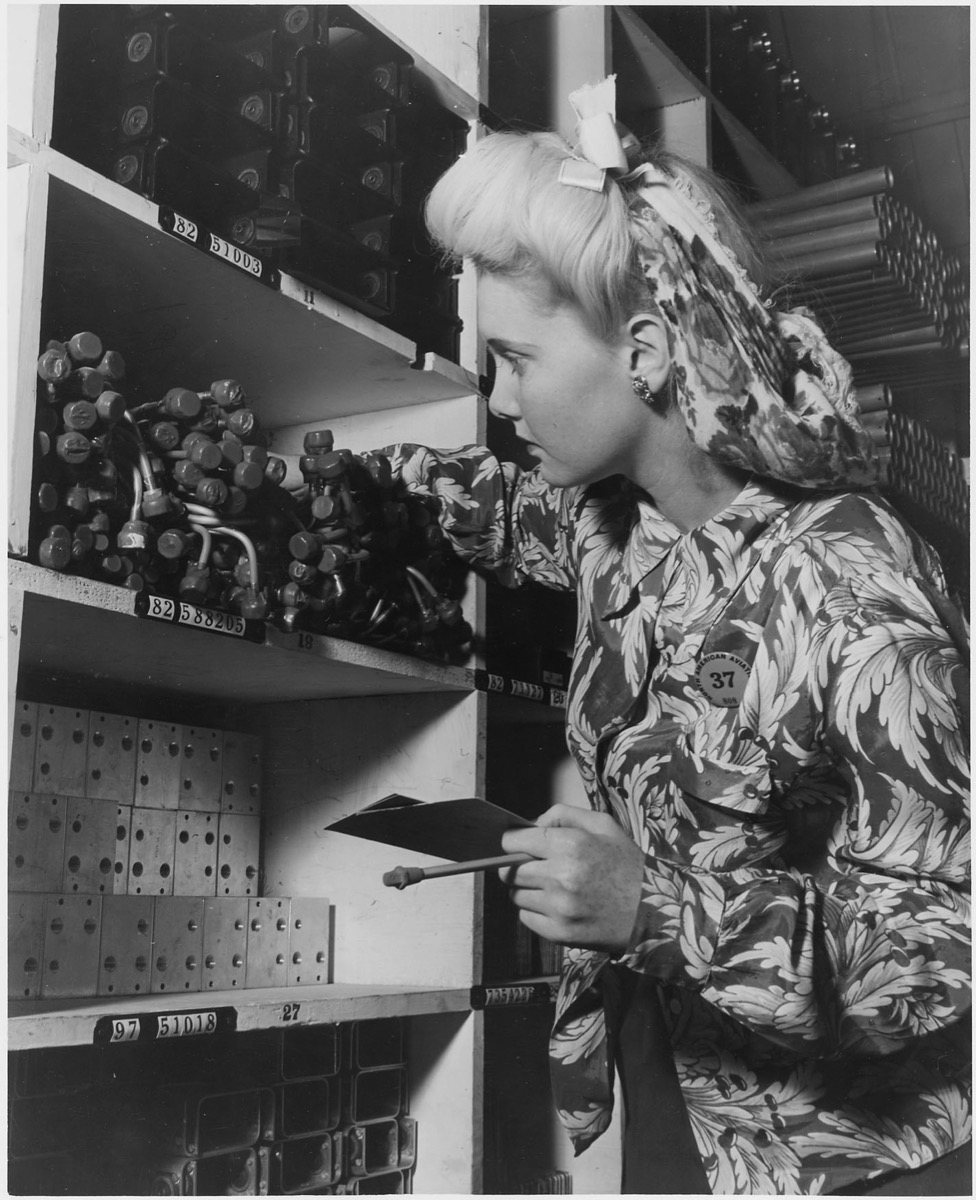
In the 1940s, at that place was no meliorate way to keep your hair out of your face than with the hair snood. These were typically crocheted (like a fancy hairnet), only a headscarf could likewise be tied like a snood, as the working woman pictured here proves. For wives working in factories while their husbands were at war, this was the wait. (Thank goodness for the invention of ponytail holders.)
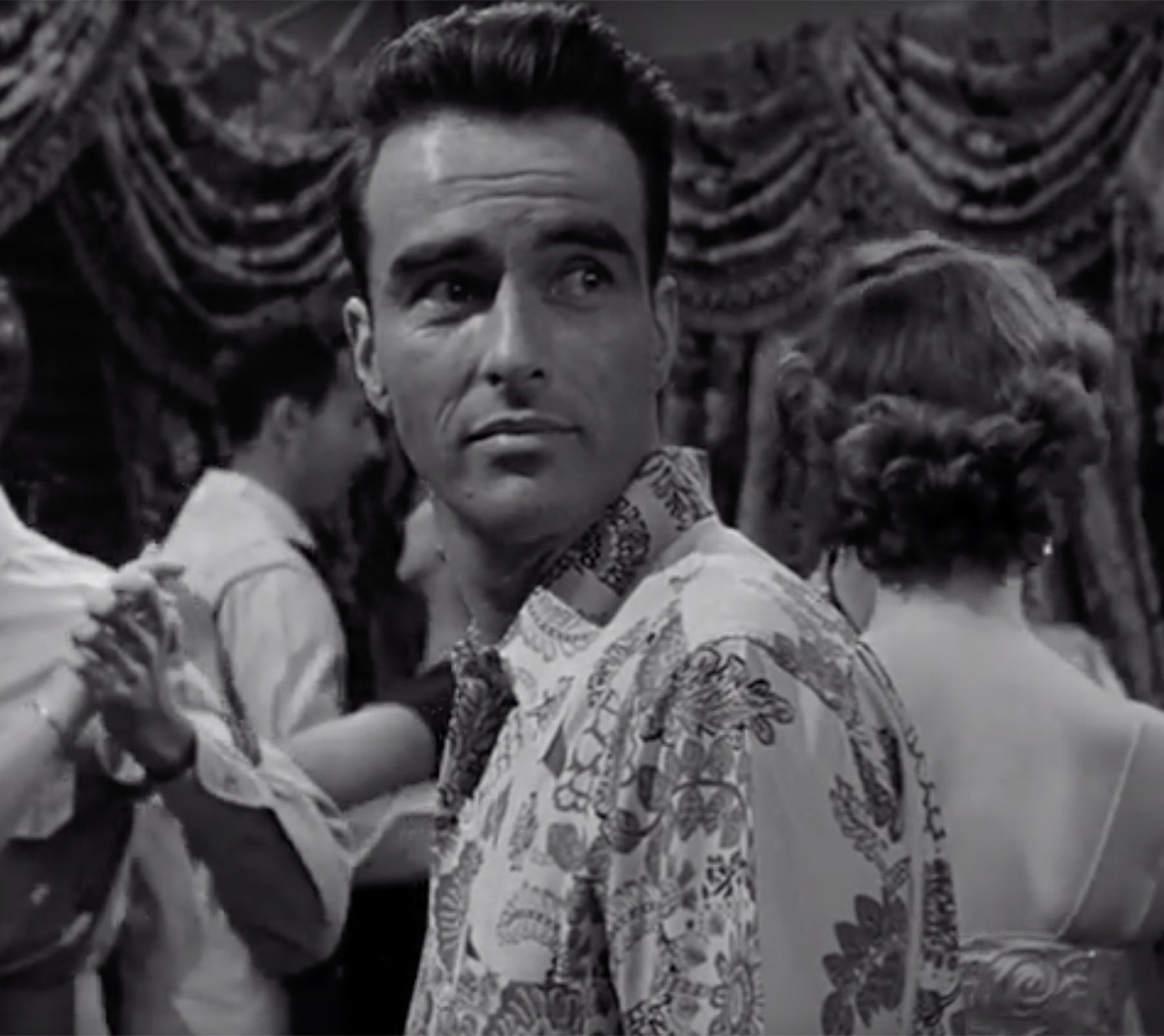
You've seen them on anybody from Elvis to Brad Pitt over the years, just Hawaiian-style floral print shirts—also called Aloha shirts—take roots that engagement all the way back to the '20s. However, their true ascendancy took place in the late 1940s and carried into the 1950s (as yous can see from this example on Montgomery Clift in the 1940s-set film From Here to Eternity). According to Racked, members of the U.S. military stationed in Hawaii before, during, and after World War II brought these shirts back as a "badge of honor," and they quickly became a coincidental wardrobe staple. And today, they withal seem to be the vacation uniform for men of a sure age, no affair what state they're visiting.
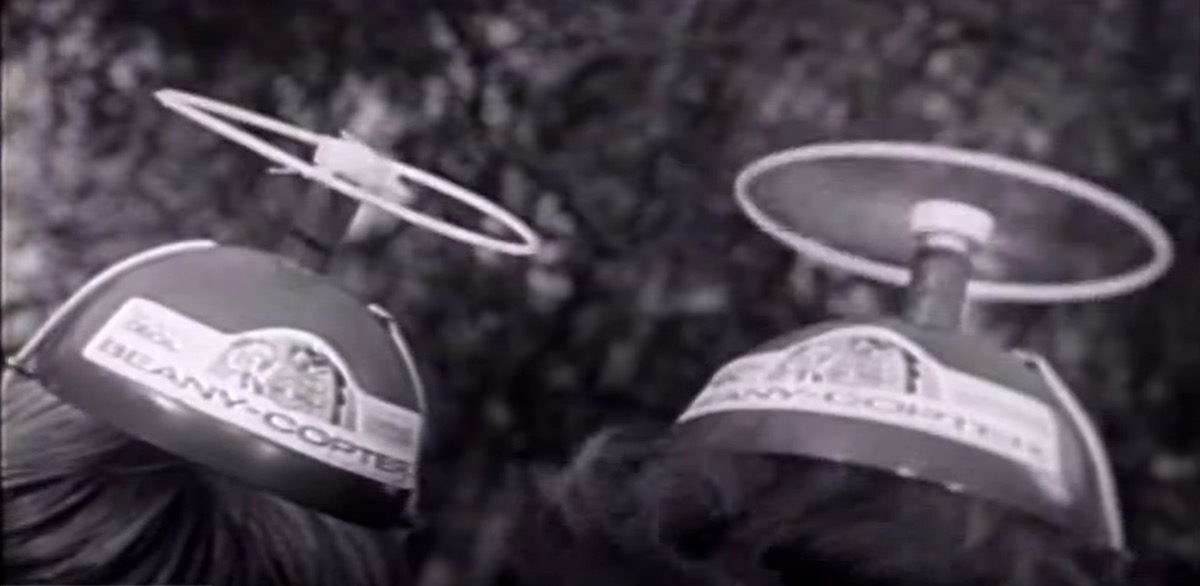
As the story goes, in the summer of 1947, science fiction writer and cartoonist Ray Faraday Nelson drafted up a propeller lid as a joke for 1 of his infinite-dwelling characters. Soon after the cartoon and his helicopter lid were presented at a sci-fi convention, others took the pattern and ran with information technology. Various entities, including legendary toy company Mattel, sold versions of it (like hotcakes) effectually the country in the late 1940s. Nelson never secured a patent for his "invention," and, as a effect, didn't meet a penny from the sales of this very popular and embarrassing tendency. And for more major style blunders, check out The fifteen Worst Style Trends from the 2010s, According to Stylists and Designers.
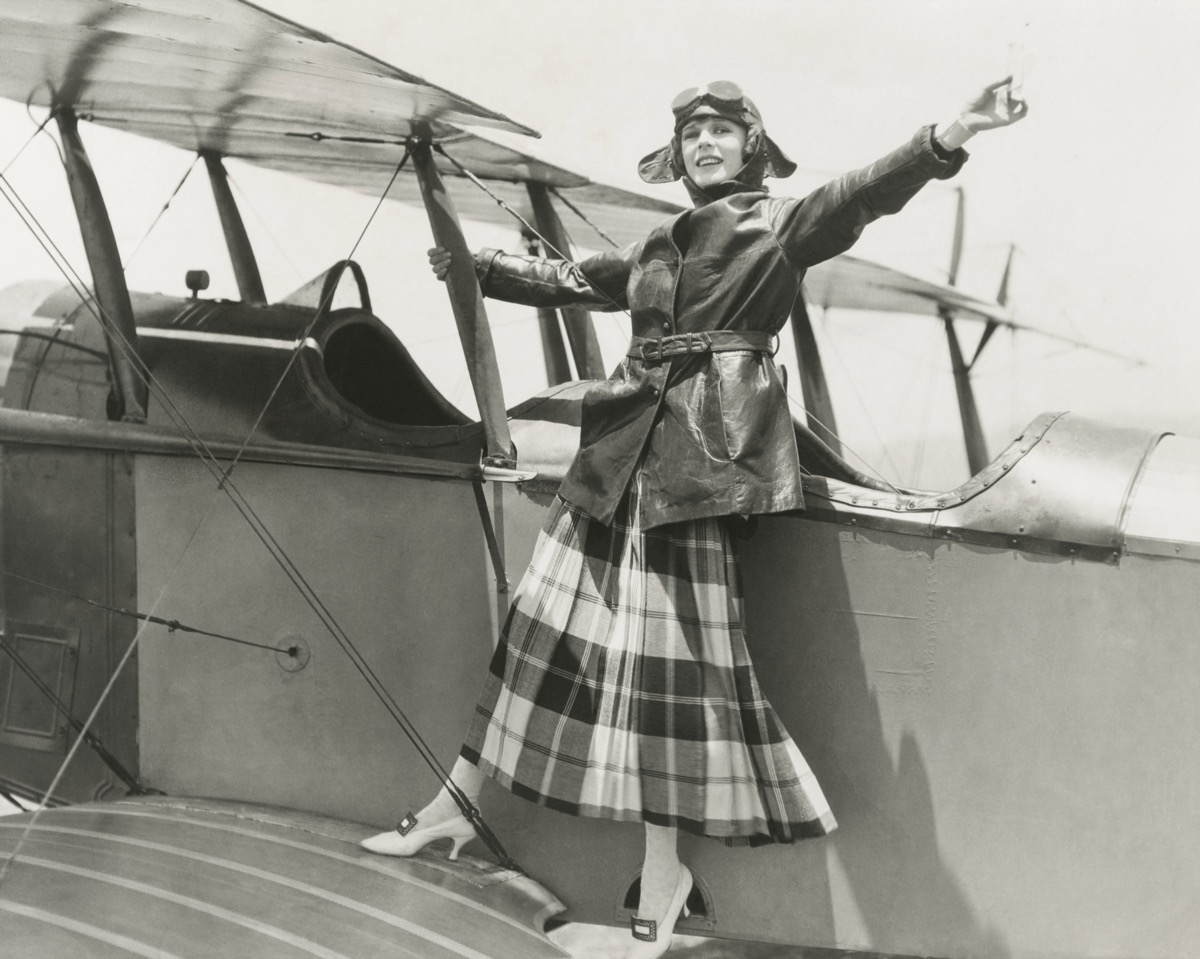
Seeing as 1940s mode was all about utility, you had to work with what yous had—and the horse blanket skirt was one of the last prominent examples of that, according to Atomic Narratives and American Youth: Coming of Age with the Cantlet, 1945-1955 pastMichael Scheibach. They were made of plaid wool horse blankets, which were bound with a black complect and fastened with buckles.
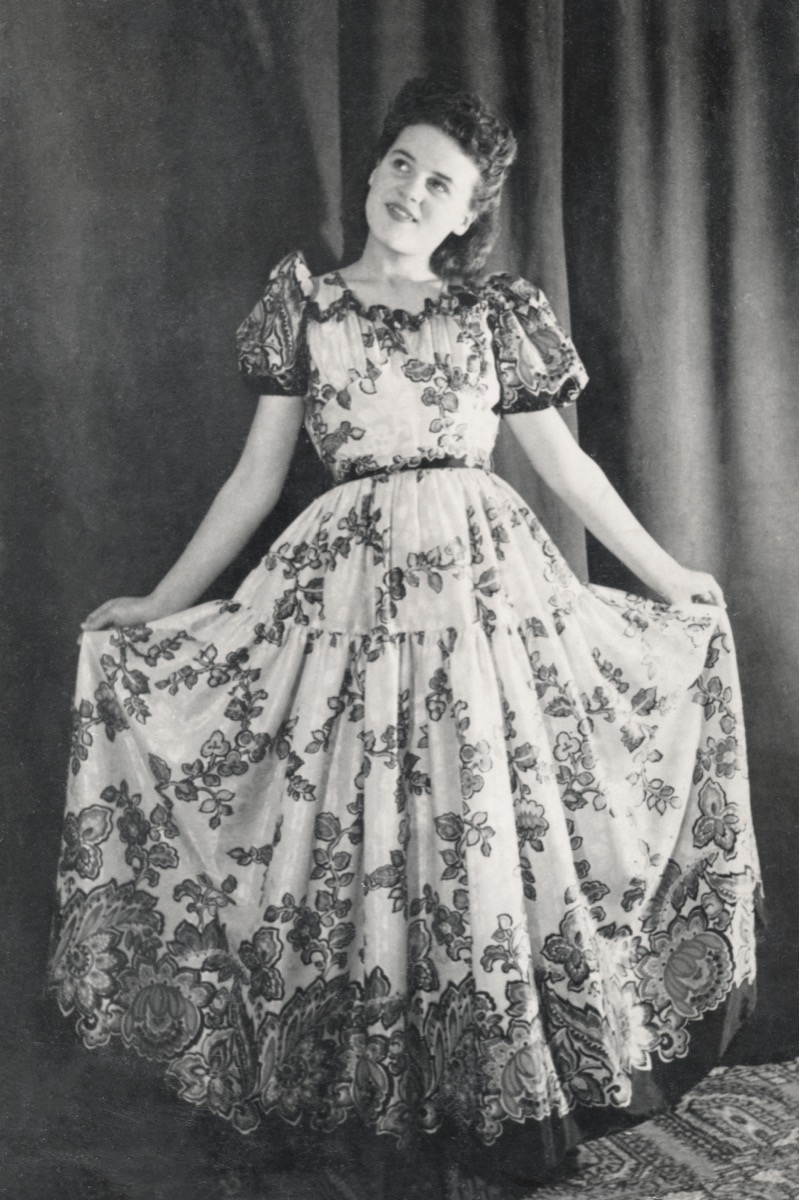
Past the late '40s, fabric shortages weren't an issue like they were earlier in the decade, and so decorative habiliment was allowed to flourish. 1 of the best examples of this is the lampshade dress, which, according to the Library of Congress, rose to popularity at the end of the decade. In their November 1948 event, Harper's Bazaar described the lampshade apparel as "a brand-new silhouette," possibly not fully recognizing that such flagrant, over-the-acme ostentatiousness would quickly be looked downwards upon. And if you're ready to revamp your wardrobe, showtime with these 23 Things You Should Toss from Your Closet Forever.
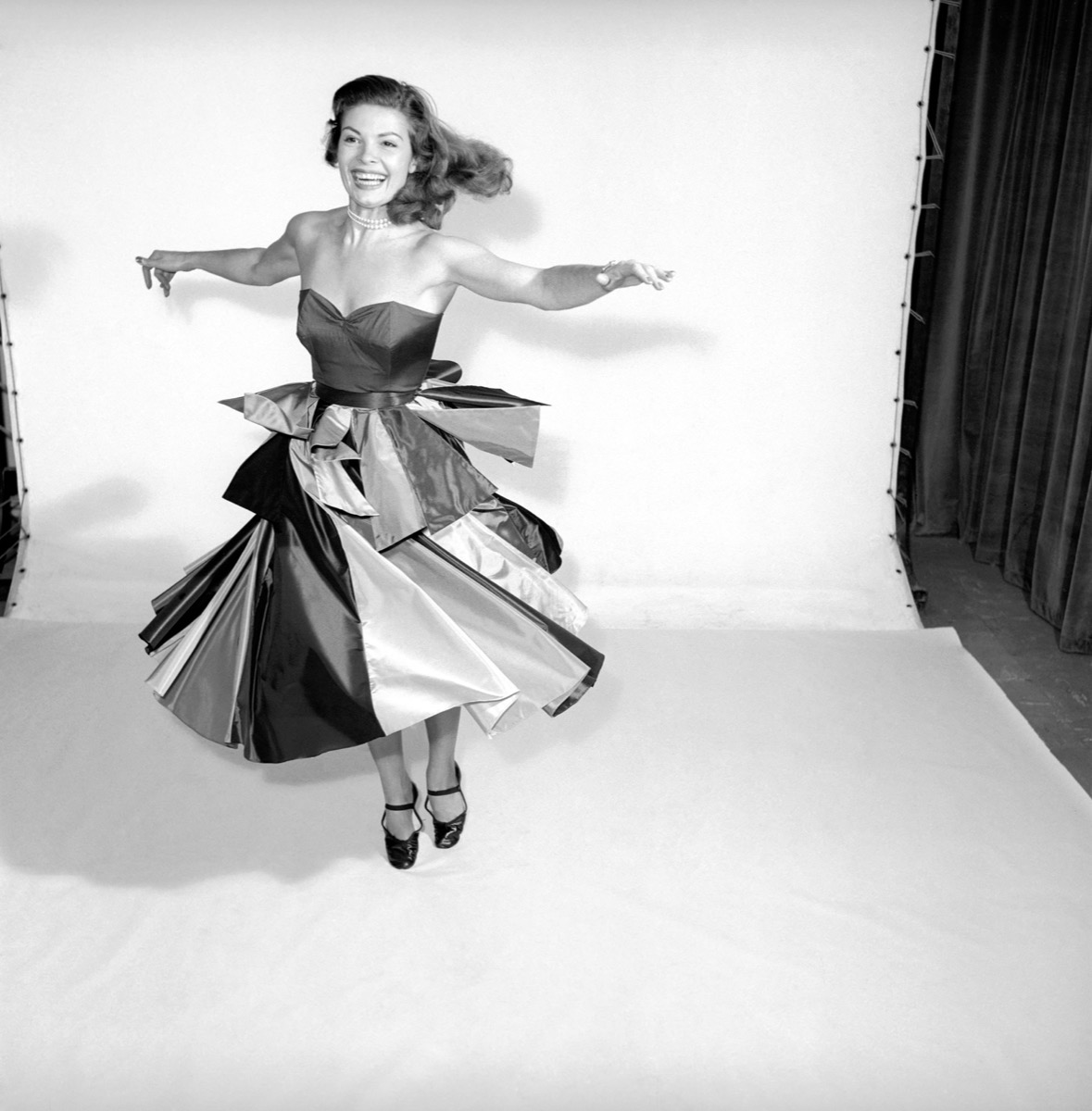
Once decorative fabric took off, itactually took off. One key example is the flying console: an extraneous piece of cloth affixed to the front, dorsum, or side of a dress or coat. The new style was commencement featured in the Apr 1949 issue of Life, which pinpointed Christian Dior as the leading designer of the trend.
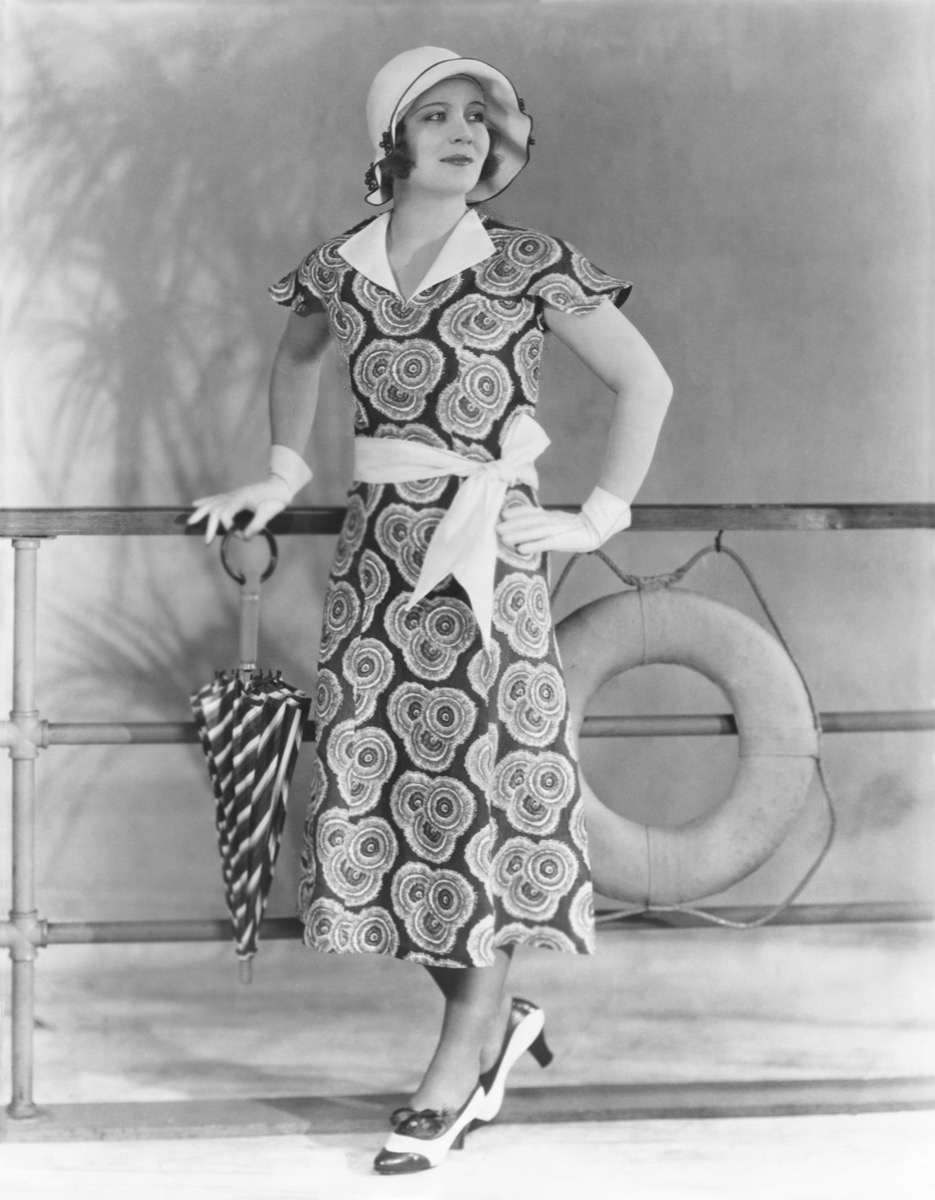
In the early on 1950s, if you wanted to jazz up an outfit, all you had to do was add a detachable collar. They came in a variety of styles, and, as shown past this 1951 guide, were fifty-fifty simple enough to make right at home. Recollect of information technology every bit a dickey for women and bluntly, we're glad neither stuck around.

In 1952, the U.s.a. hitting height "poodlemania," co-ordinate to Jennifer Grayer Moore'sFashion Fads Through American History. Actual poodles on their own were seen as status symbols, but the connection between the fluffy dogs and Parisian fashion took things to a whole new level. In the 1950s, they were all over the big screen—like the colorful bunch Doris Daytrotted out in 1952'south April in Paris. Soon plenty, poodle patterns started popping up on sweaters, scarves, handbags, and, of course, skirts. Yet, despite the ubiquity, this trend was quickly sidelined into the dustbin of fashion history.
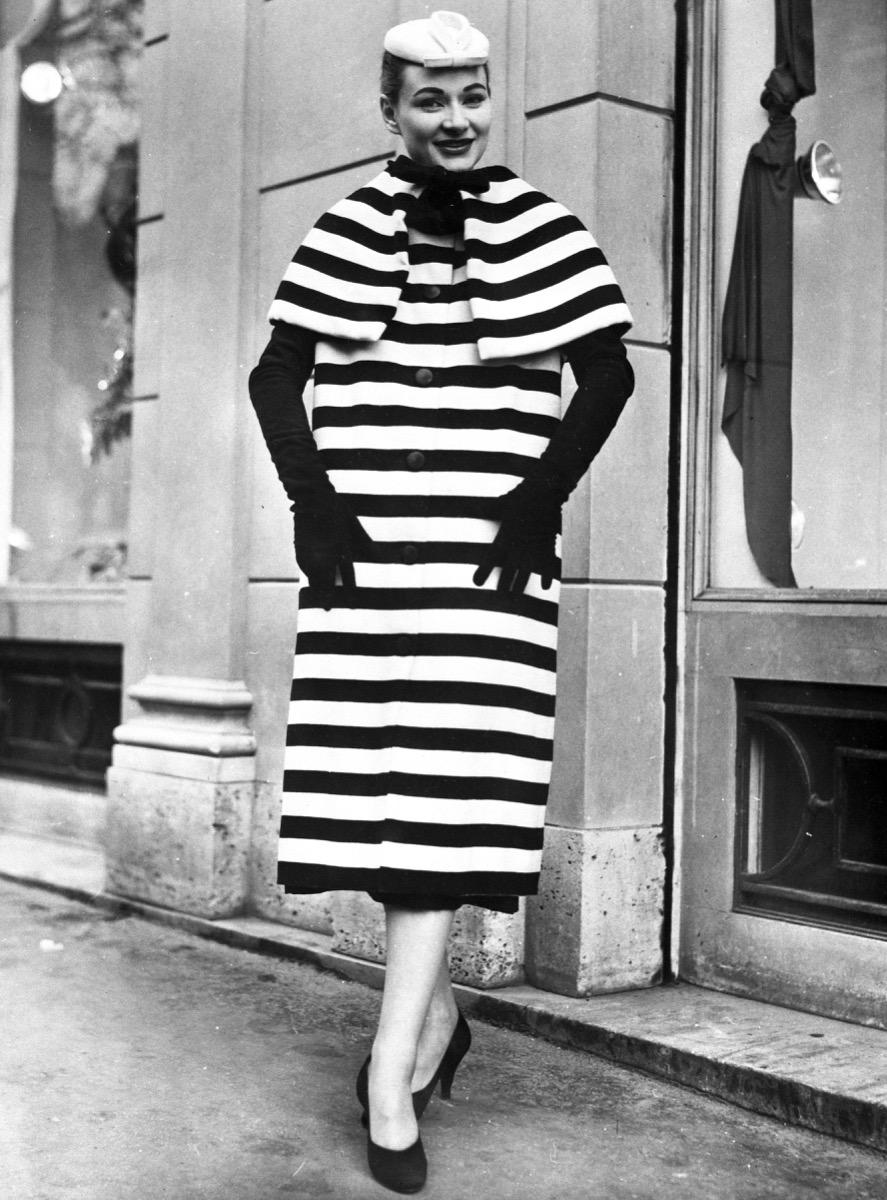
Nosotros have Cristóbal Balenciaga to thank for this ridiculous article of wearable. In 1953, it was the Castilian designer who introduced the airship jacket, a garment that The Design Museum notes "appeared to lengthen the legs and set the face on a kind of pedestal." Yes, if you ever longed to look like you were missing a neck, this was the '50s trend for you.
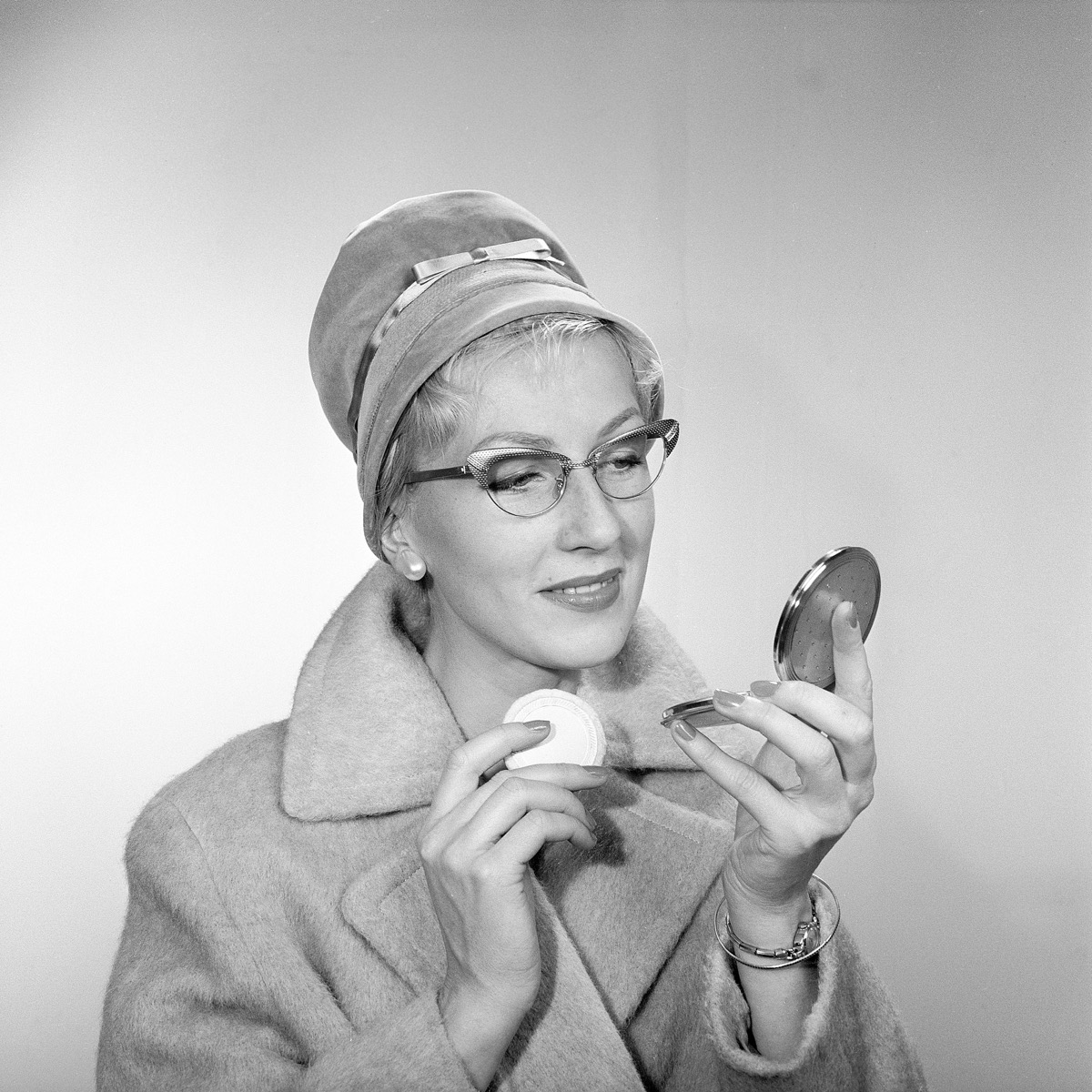
For the most part, the 1950s were a fantastic fourth dimension for hats. Still, not all hats stood the test of fourth dimension. Case in point: the pail hat. A cousin of the equally silly bucket hat, pail hats were a bit more boxy, and—among women, at least—were oftentimes adorned with flowers, bows, or other ornaments.
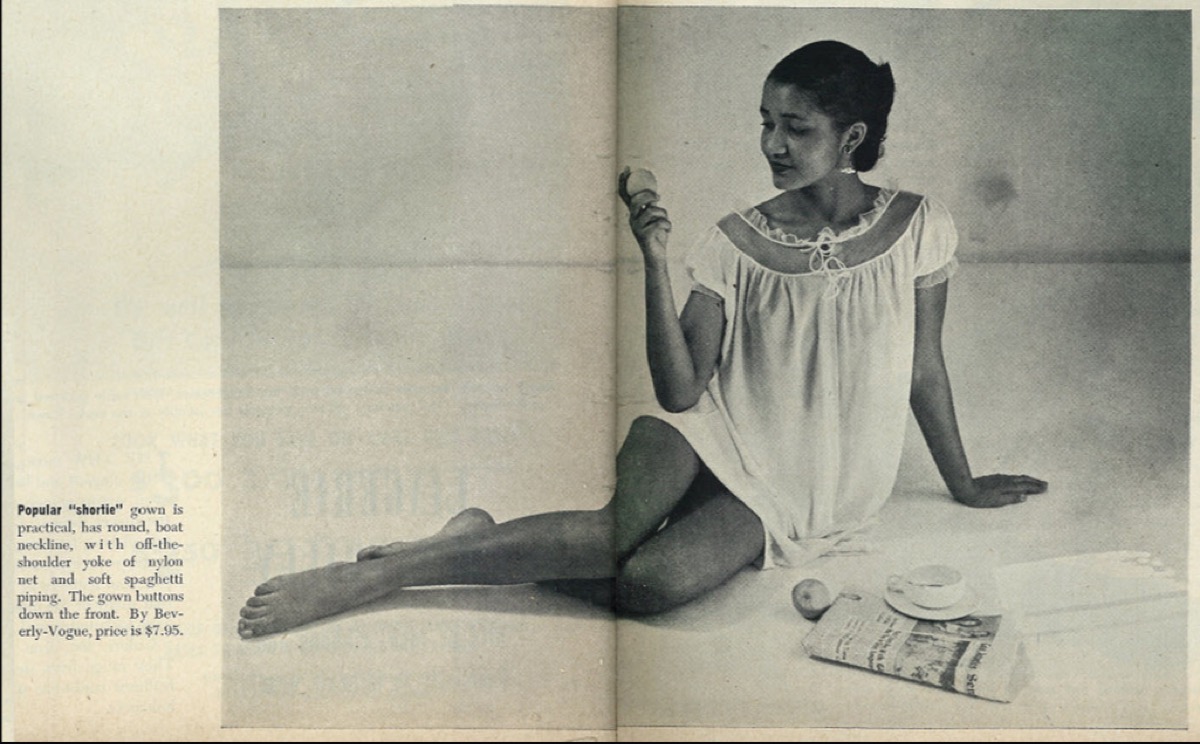
Turns out, foreign fashion isn't specific to daytime looks; over the years, at that place take been plenty of wacky pajamas, too. 1 instance is the shortie nightgown. Equally seen in the 1953 spread in Ebony pictured here or this McCall's blueprint from 1955, the cringeworthy look came consummate with a bloomer set. Thankfully, in the years since, women take constitute cozier nighttime digs.
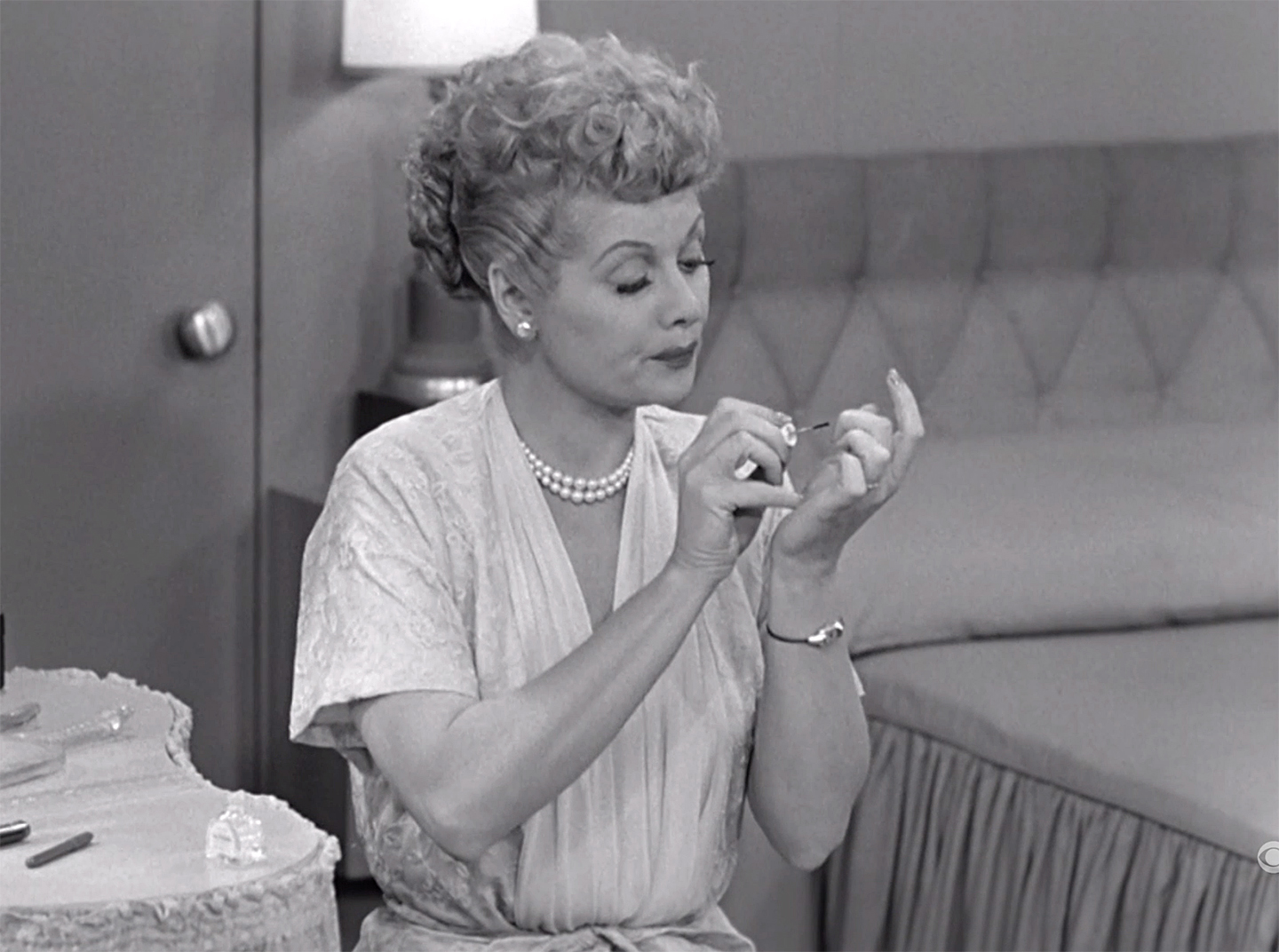
As the decade went on, poodles weren't just for wearable and accessories; they were likewise for your very own caput. Past the mid-1950s, salons were reporting that iii out of five women were requesting "The Poodle," thanks toLucile Brawl and her hit showI Love Lucy, which aired from 1951 to 1957. The look gathered tons of curly pilus up tiptop and was sleeker on the sides. And there's a reason nosotros haven't seen information technology over again in more than 60 years.
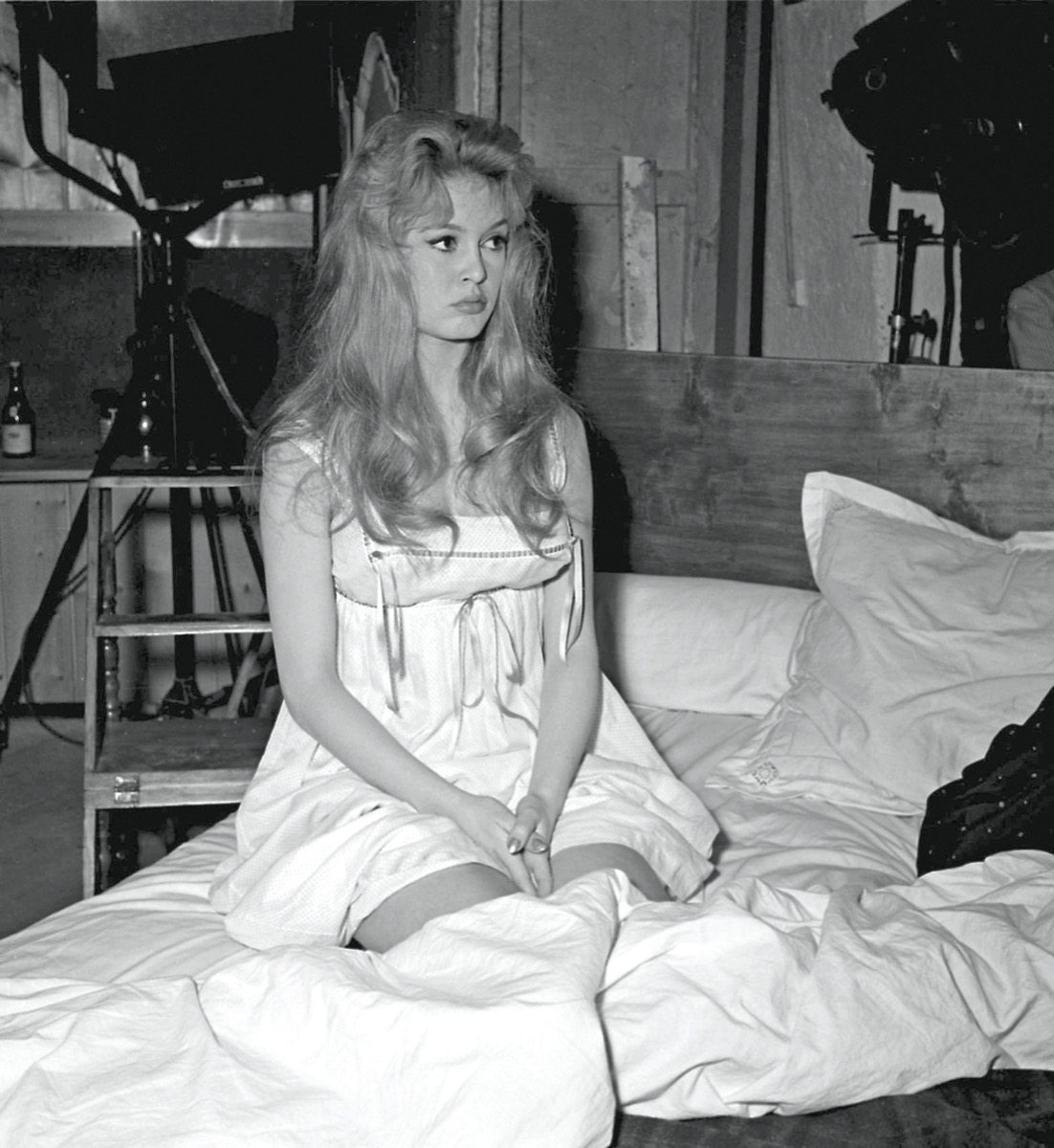
In the late 1950s, the line between evening wearable and nightwear started to blur. As the Fashion Plant of Technology points out, "these dresses lay in-between daywear and evening gowns, falling at the length of a 24-hour interval dress but embellished like evening wear." Take this Balenciaga nightie-turned-gown look from 1957, for example. Scandalous!
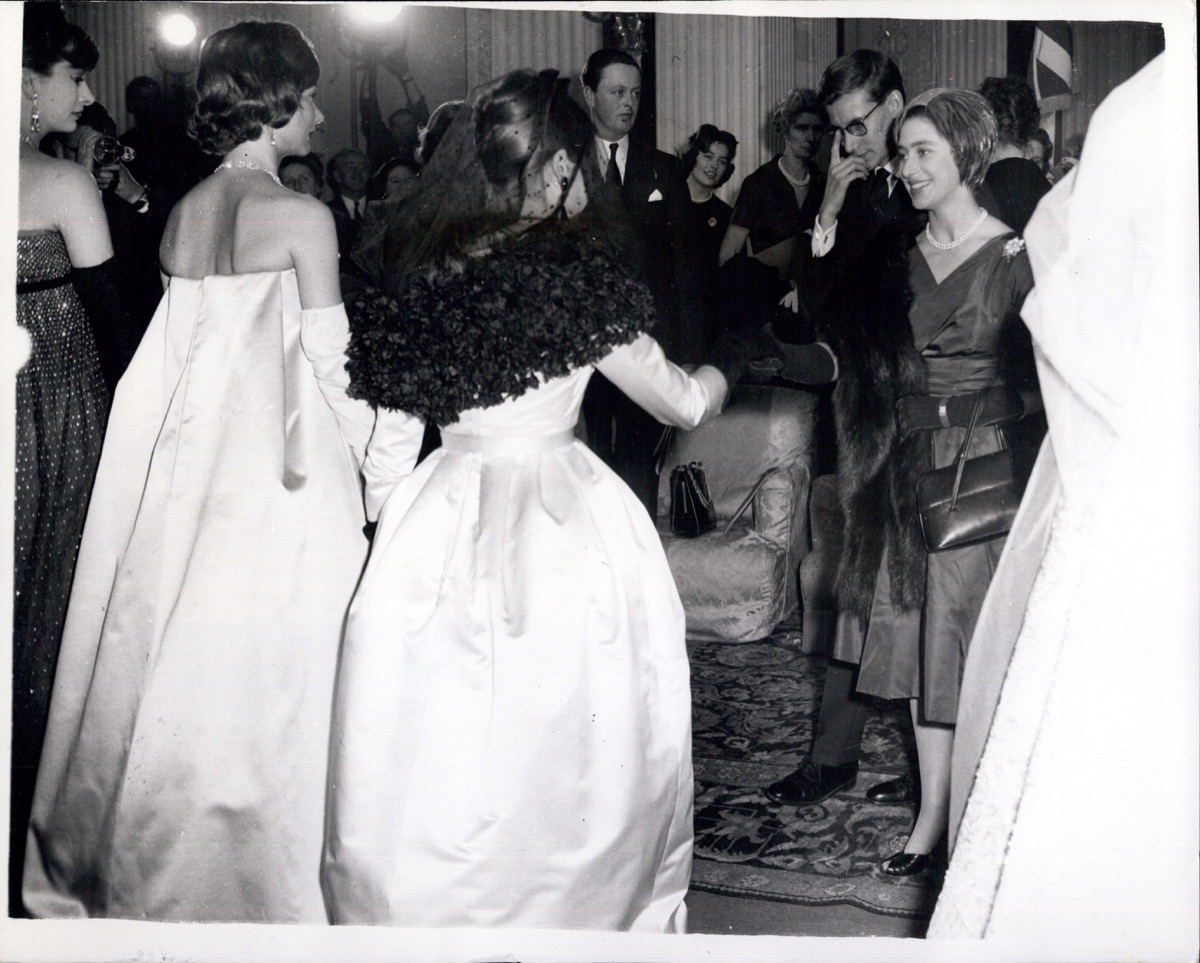
Compared to the tight hourglass dresses that were popular throughout the 1950s, trapeze dresses—flowing, waistless, triangular things—seemed modern by the end of the decade. The 1958 Dior drove, designed by the one and just Yves Saint Laurent, introduced the shape—and here'due south Her Royal Highness Princess Margarettaking the ridiculous look in.
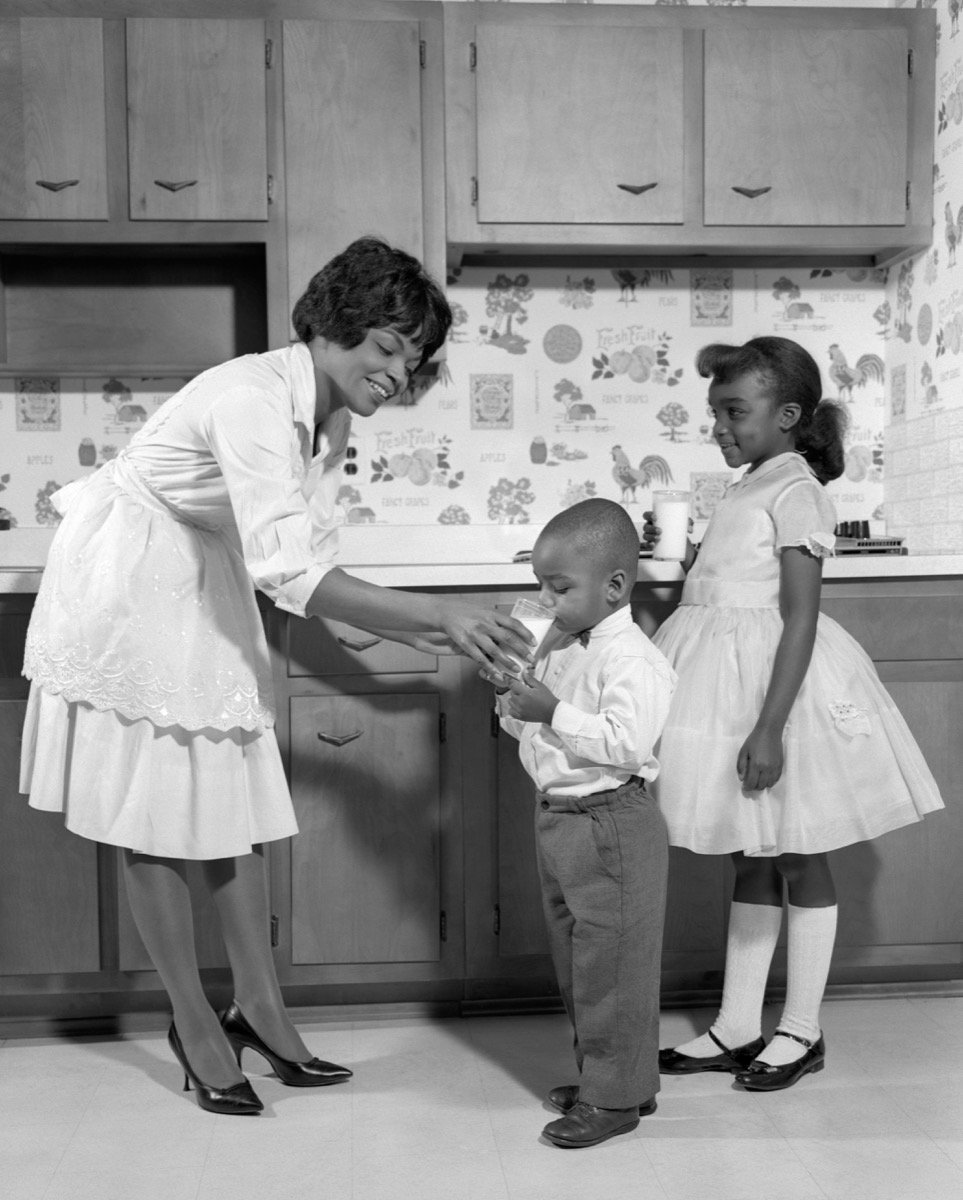
The apron skirt was one of the most emblematic symbols of the late 1950s and early '60s. Fluffy, vibrantly colored, and designed to be worn past housewives, it's a vestige of a bygone era. Certain, these garments were feminine and fun, but they weren't practical for cooking and cleaning, and were a sterling example of women's article of clothing that happened to be fashionable but not remotely functional.
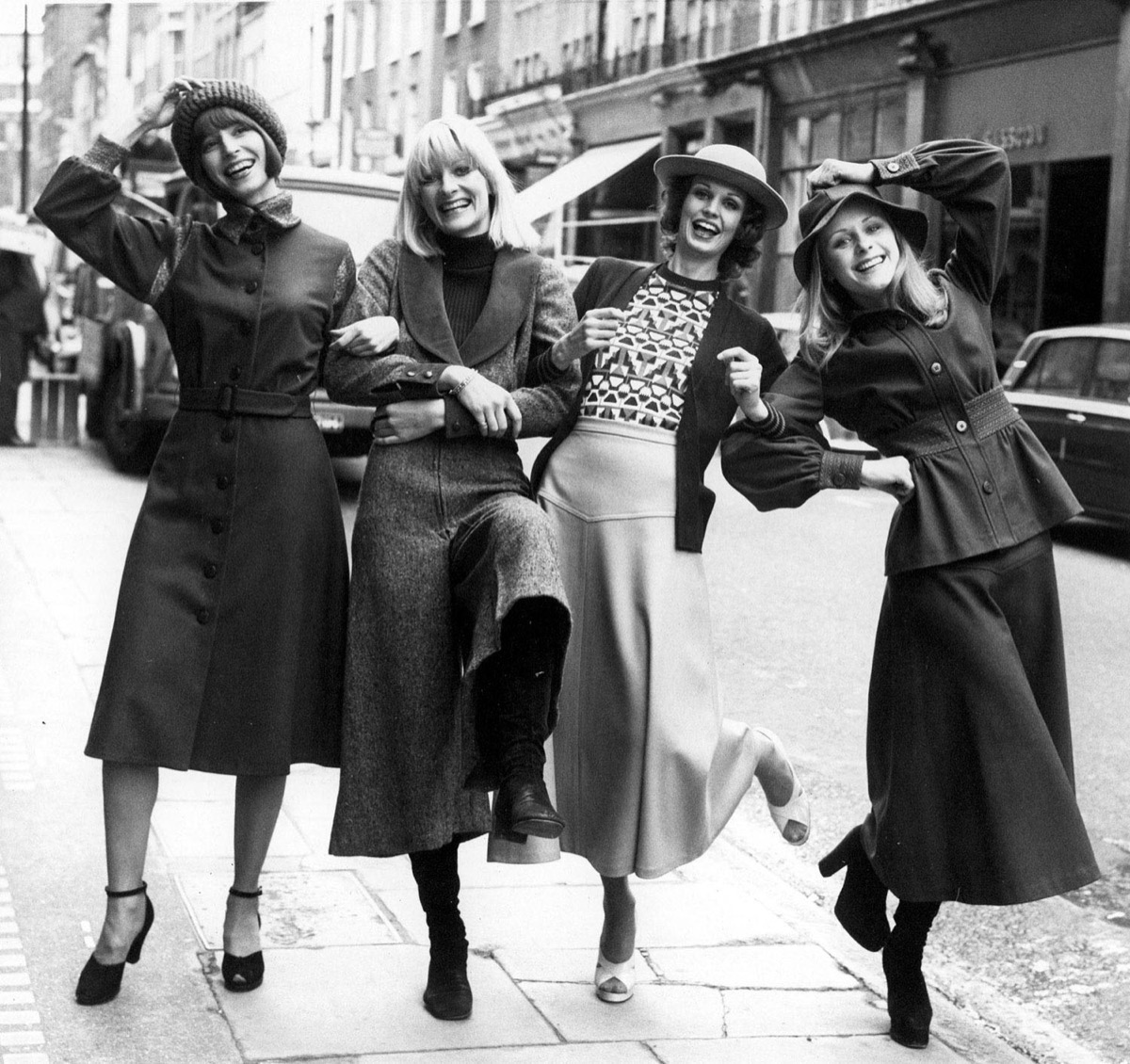
Culottes, the pant-skirt hybrid, get in and out of way similar the tides. But they were extremely popular in the 1960s—specially as a vacationing garment. As the McCall'southward web log notes, they were oftentimes marketed as "playsuits" for adults. Cringe!
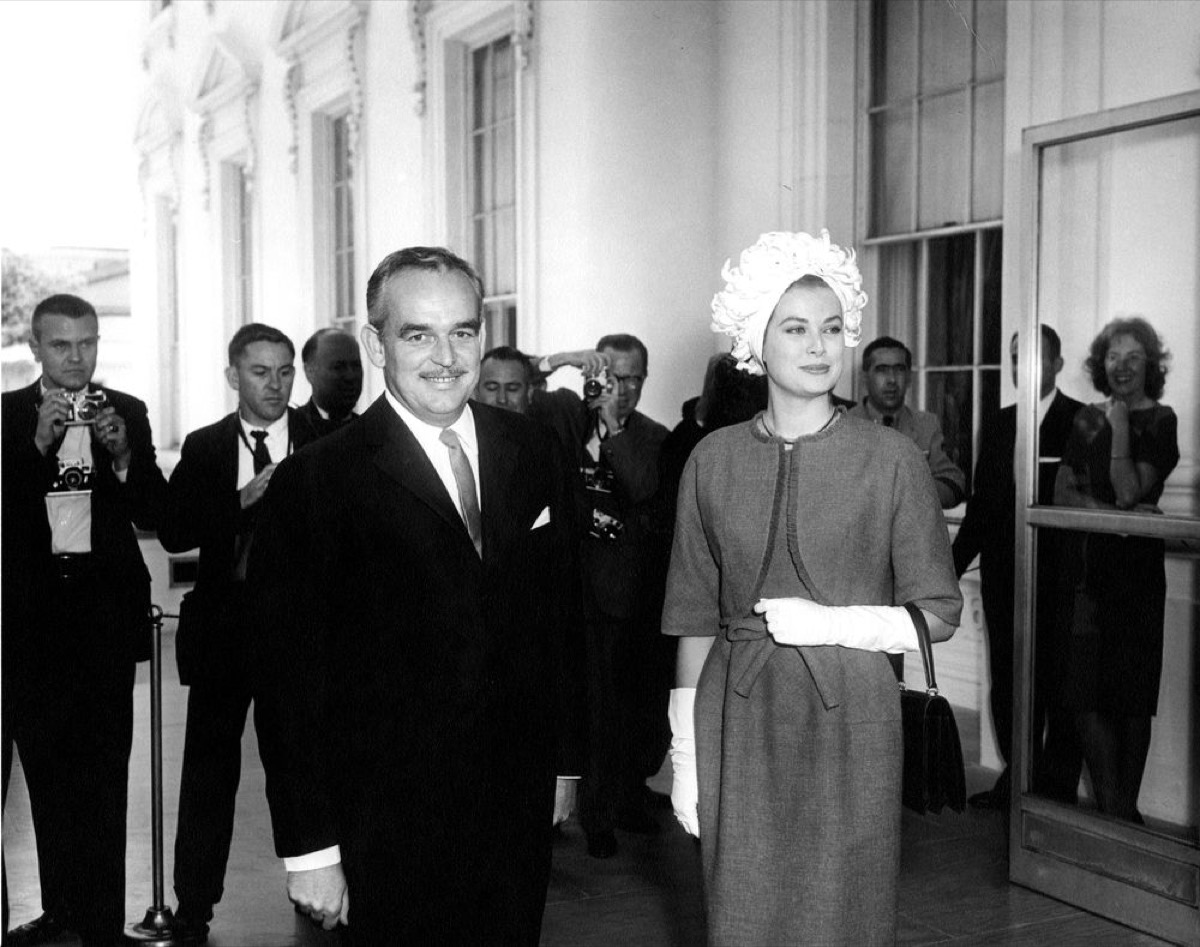
Sometimes, mode is meant to be every bit accessible as possible. And sometimes, it's meant to be every bitinaccessible every bit possible. For an example of the latter, expect no further than this 1960s outcome of Vogue, which featured an impossible-to-pull-off leather turban. And extra and Princess of Monaco Grace Kelly, sported this strange white turban in 1961 at The White Business firm, proving that even the nearly glamorous women make fashion mistakes.
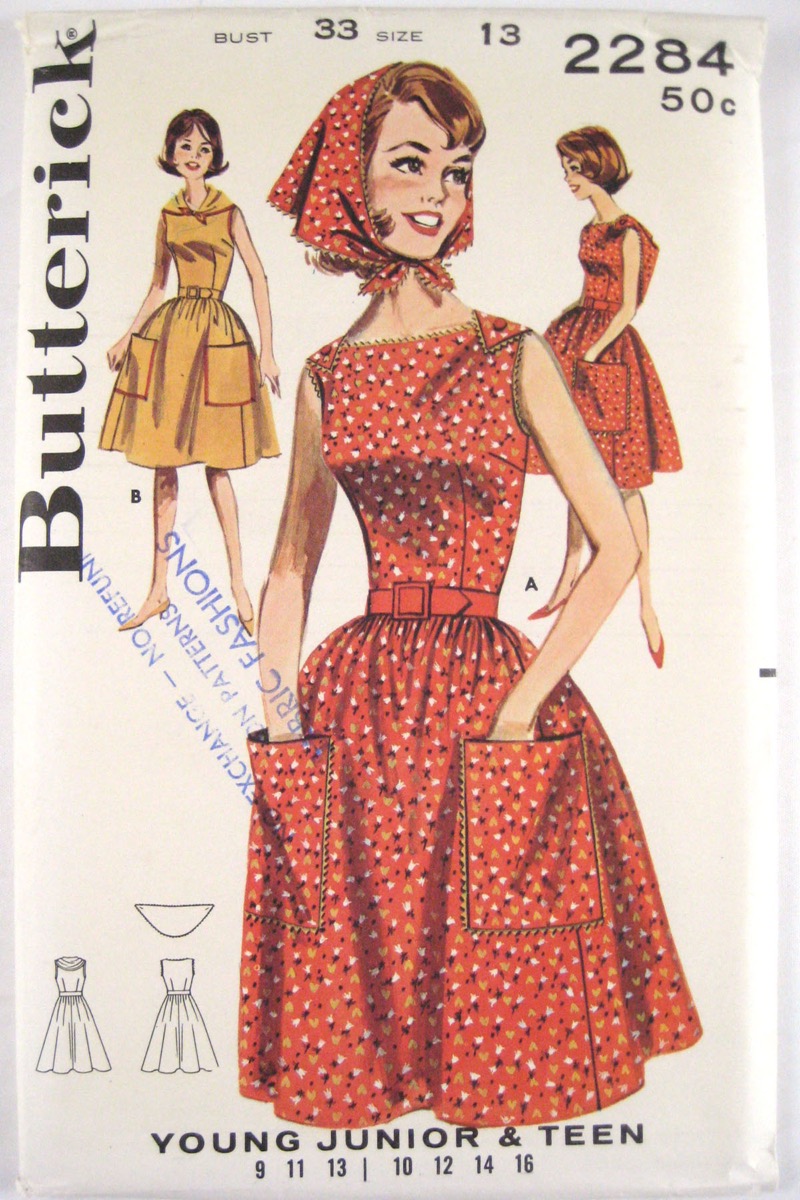
The roadmap for 1960s fashion was laid out in no small-scale function by Audrey Hepburn'south era-defining part inBreakfast at Tiffany'due south, which came out in 1961. While many of the styles from the movie—glamorously oversized sunglasses, opera-sized cigarette holders—were worth copying, some decidedly were not—like the matching headscarf look. And while there's nothing incorrect with a headscarf on principal, nosotros're glad we've moved on from having it match the wearer's clothes, as seen in this 1962 Butterick design.
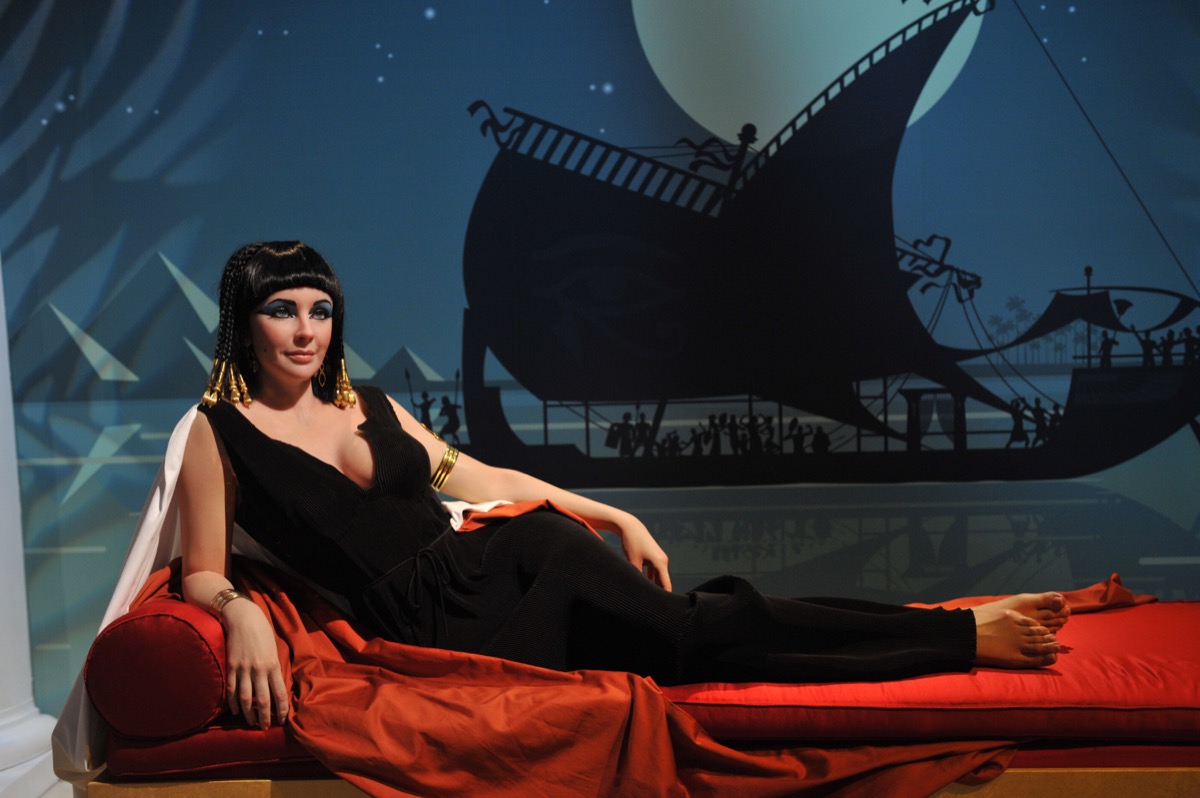
Bold liquid eyeliner. Ostentatious gold jewelry. Geometric haircuts. Yous can give thanksElizabeth Taylor and the 1963 filmCleopatra for popularizing ancient Egyptian-styled fashion.
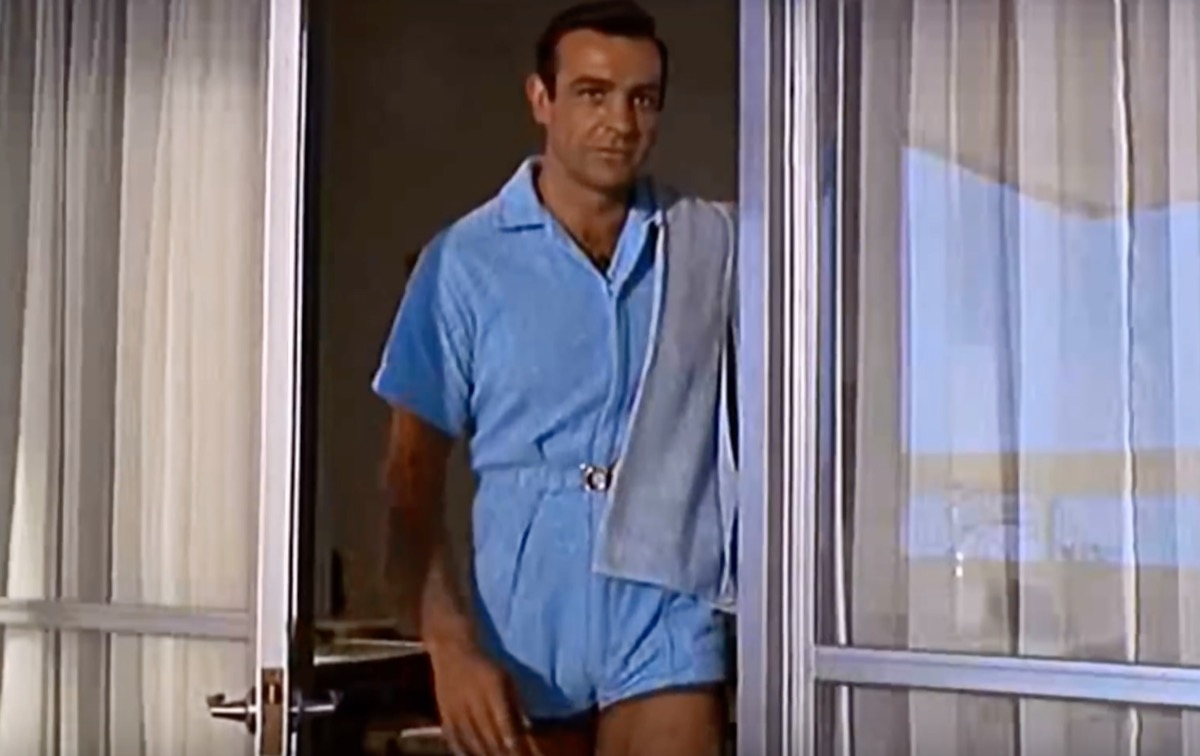
It'southward hard to blame folks of the 1960s for doing asSean Connerydid in the 1964 hit movieGoldfinger, but this romper he donned on screen didn't withstand the test of time. Whatever strapping immature lad who emulated the look likely regrets it at present.
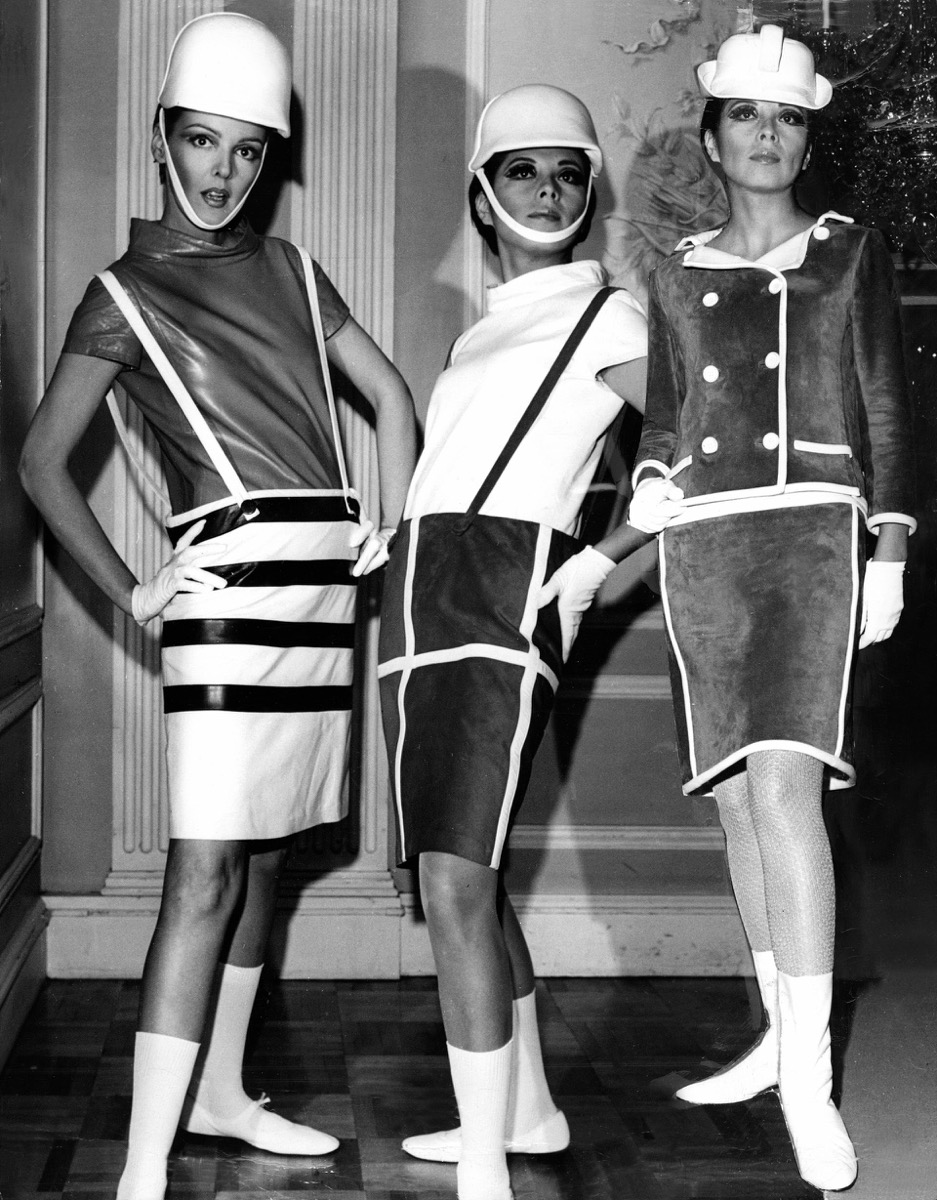
In the mid-1960s, with the Space Race fully underway, information technology's no surprise that manner reflected the cultural obsession of the time. Designers likeAndre Courrèges andPierre Cardin entered into a couture Space Race of their ain. In fact, as W reports, Courrèges showed such an involvement in infinite travel that NASA even invited him to come visit Greatcoat Canaveral in Florida. The rails Space Race gave us such retro-futuristic designs as leather skirts-and-suspenders and 23rd-century-inspired construction hats. Give thanks goodness these looks were quickly blasted to the moon.
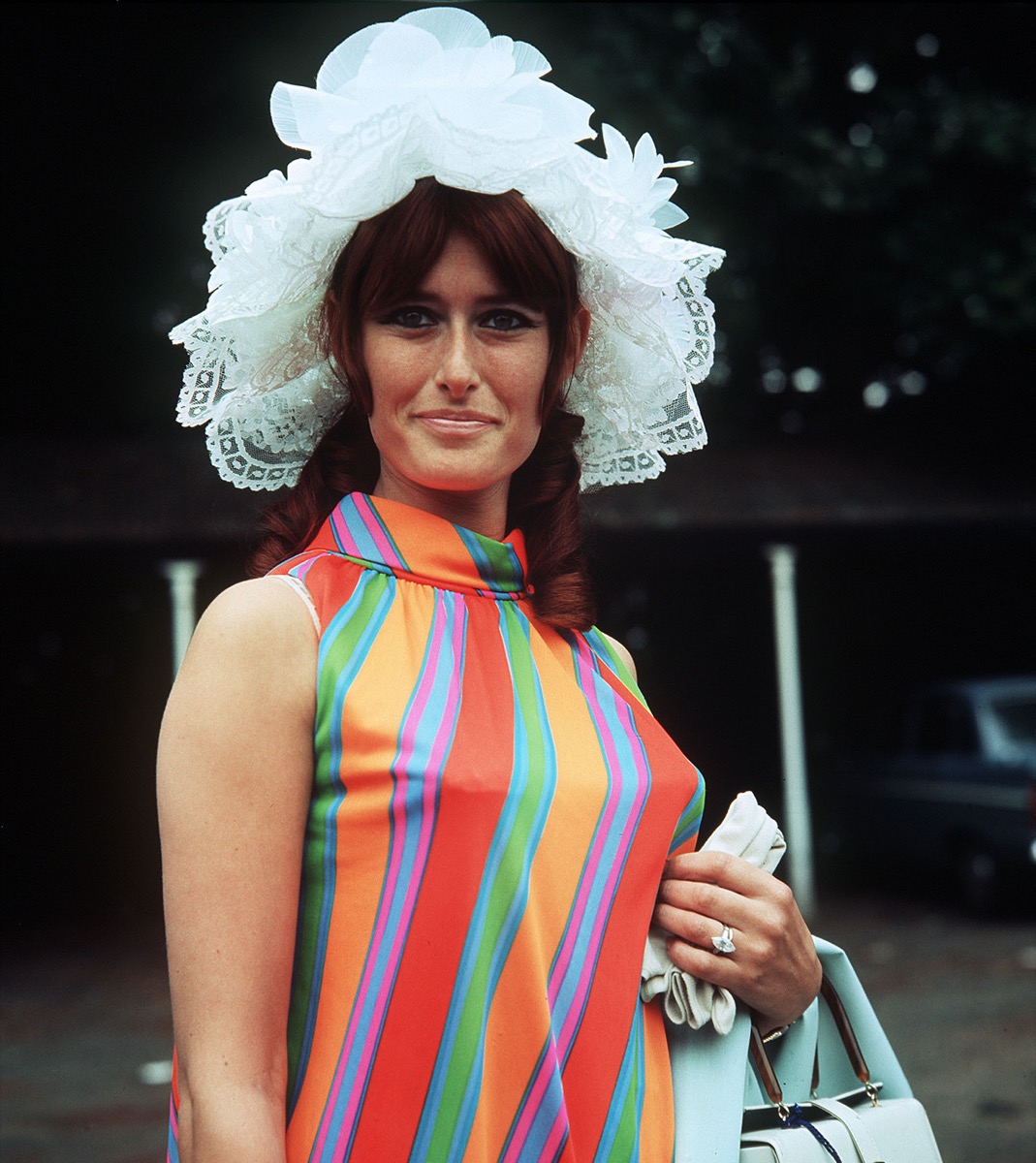
Color blocking is one thing, but the trend in the mid- to late '60s was combining colors that are diametrically opposed and, under no circumstances, get together. For example, Harper's Bazaar points out this 1966 editorial that featured models wearing—gulp—orangish with pink, and yellow with light-green. Ick!
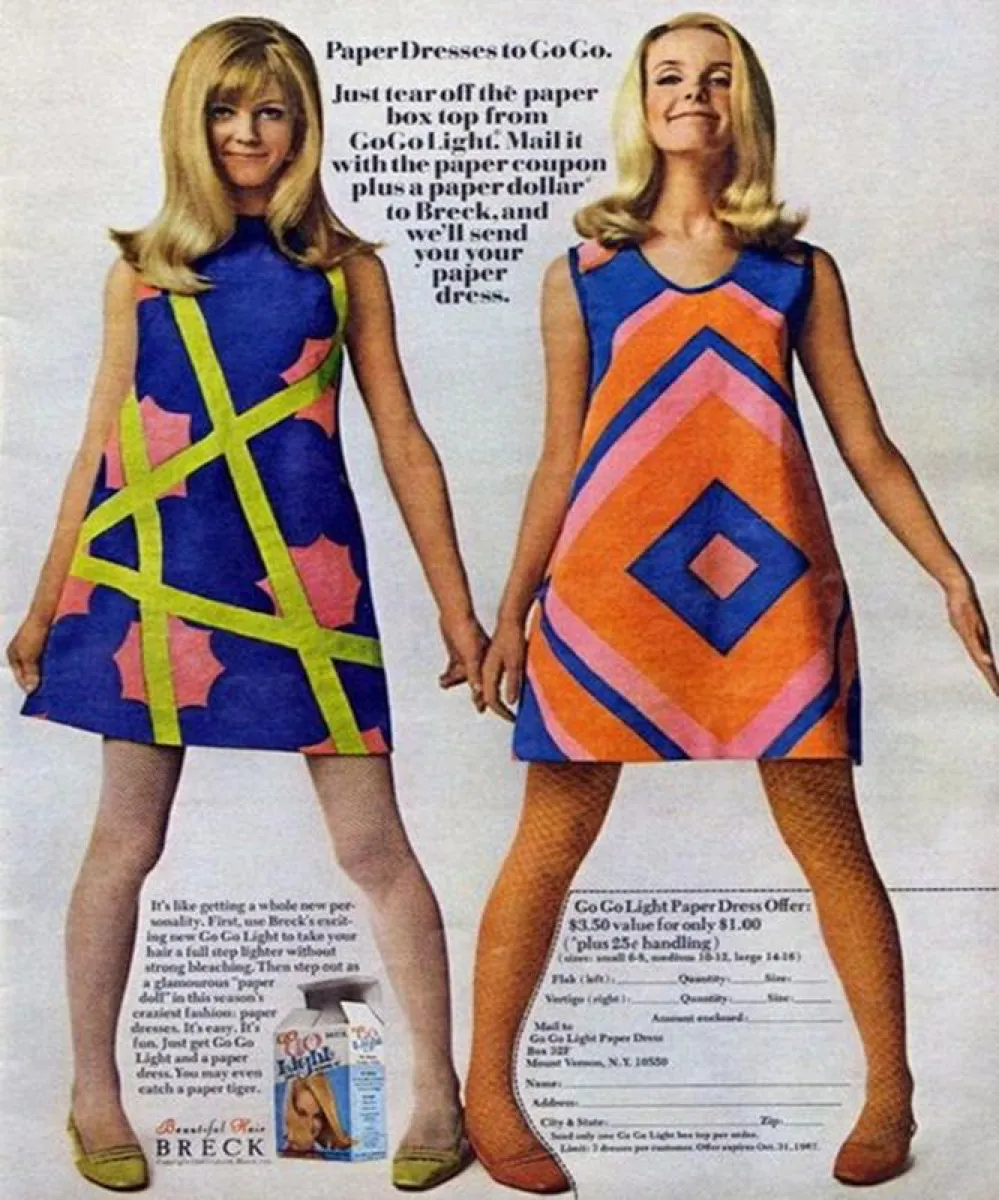
We may talk nearly today'southward fast fashion equally being disposable, merely in the 1960s, some of the clothing really was—because information technology was fabricated of paper! Scott Paper Tissue (yep, the toilet paper company) introduced paper shift dresses in 1966—and soon others followed adjust, every bit this deal from the hair coloring experts at Breck proves. According to a 1967 article in Time, the dresses sold for around $1. For $7 you could go a paper kaftan, while $12 would buy a homo's adjust. And for $fifteen you could get the paper nuptials apparel of your dreams. Hope it doesn't rain!
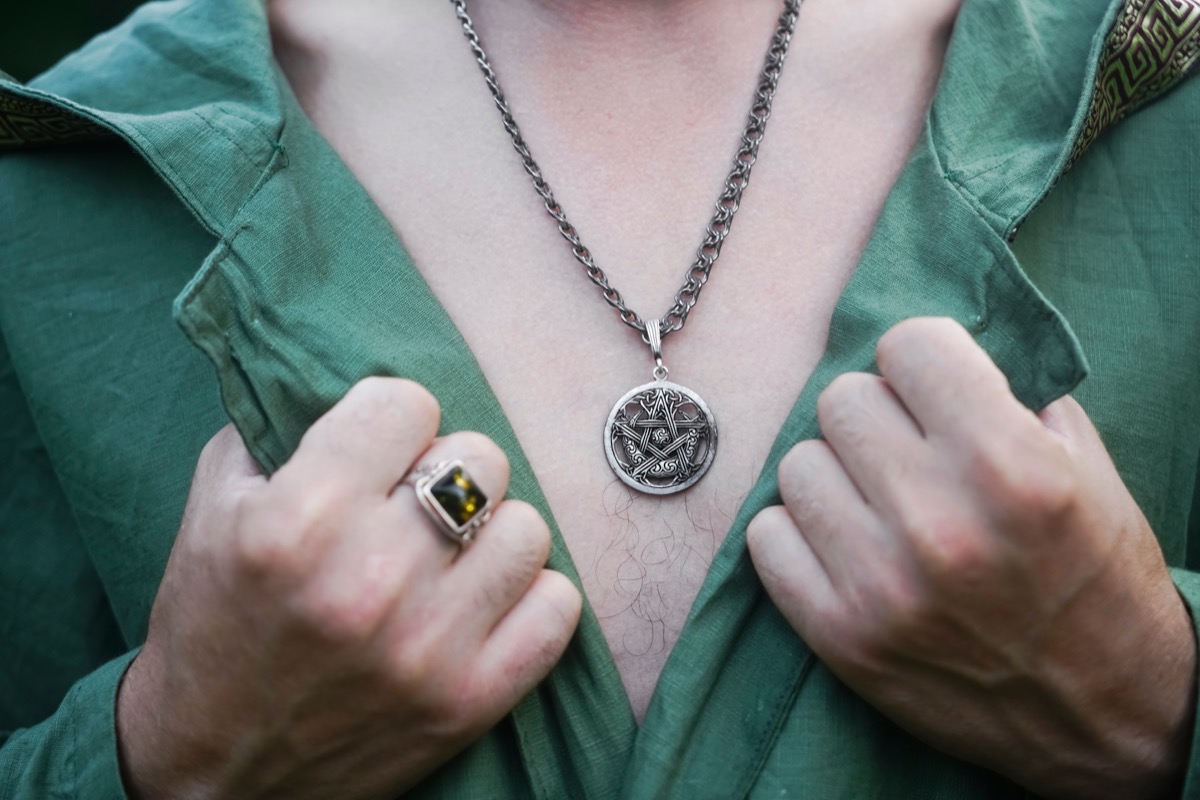
Typically, men's fashions are far more staid and tedious than women's looks. But the '60s and '70s were definitely an exception. In terms of decoration for guys, in that location was no accompaniment more than beloved in the tardily '60s than the pendant necklace. Exhibit A: The 1968 Newsweek trend slice aptly titled, "Penchant for Pendants."
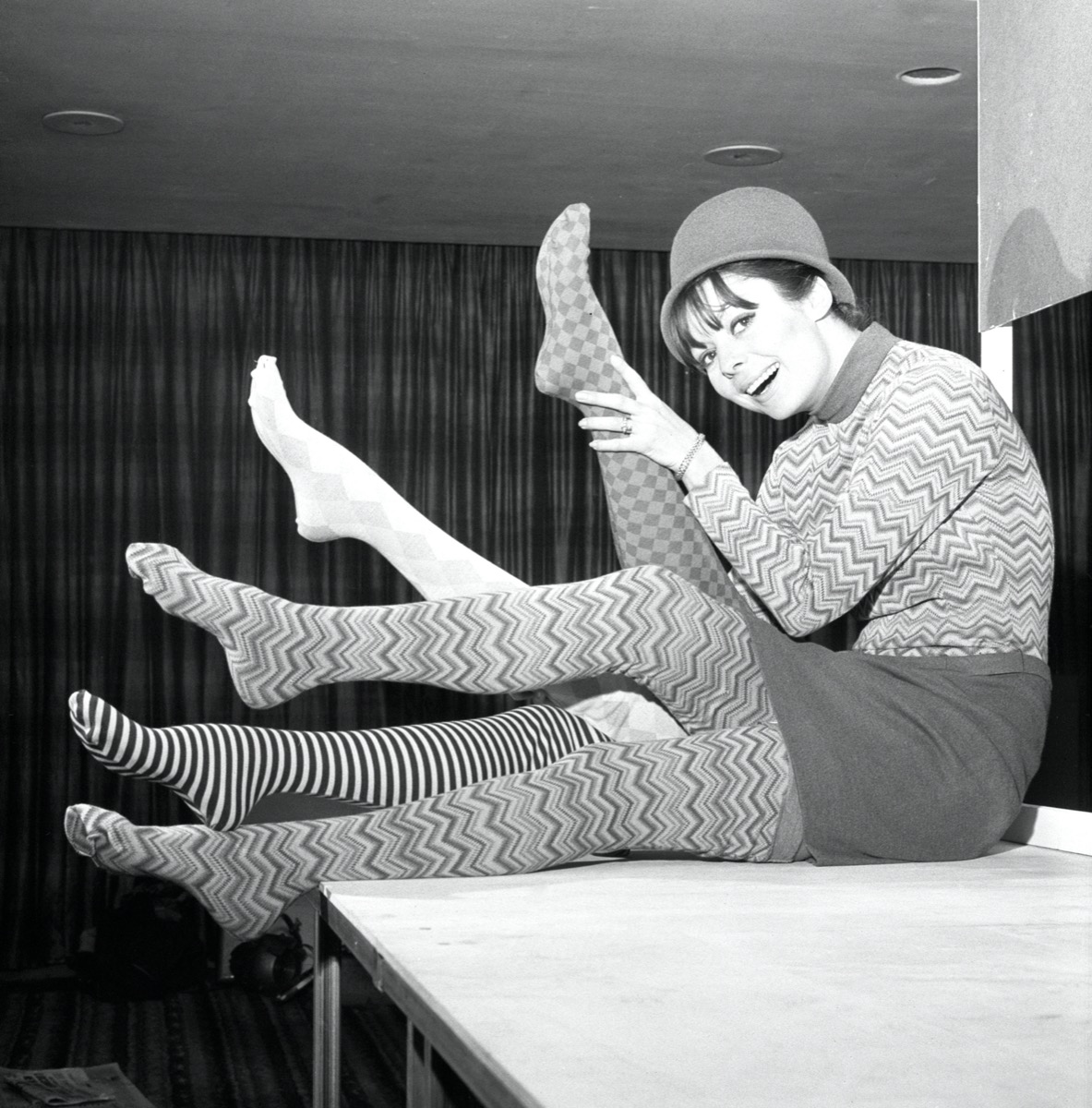
Past the end of the 1960s, at the dawn of the psychedelic era, women started rebelling against the apparently-colored pantyhose that dominated for decades. Still, according to fashion business organization manager Kalyani Kala, at the fourth dimension, going "blank legged … was still too immodest." So women plant a middle ground: fun and flirty patterned tights, as shown on this model.
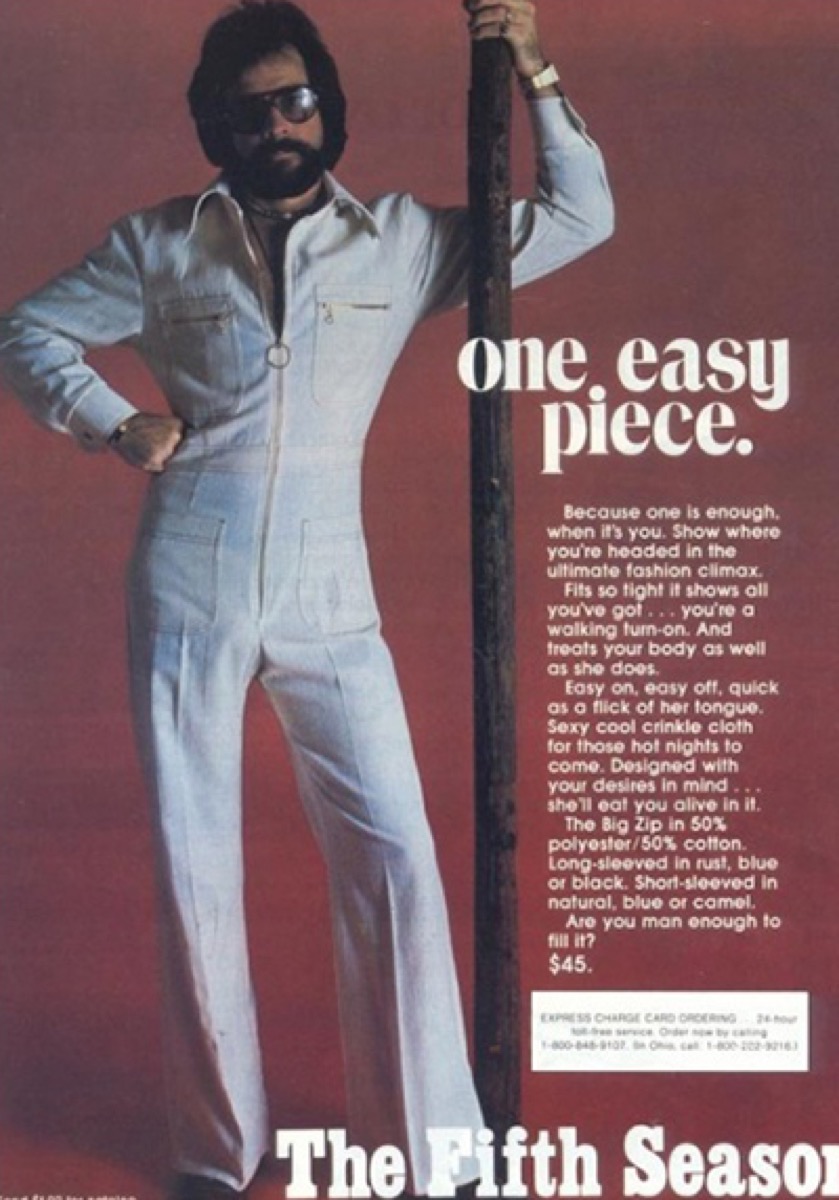
Jumpsuits knew no gender in the 1970s and were en faddy throughout the decade. According to a trend written report in The New York Times from the time, they often had the "silhouette of a garage mechanic, a carpenter, an army nurse, a house painter, [or] a pilot," as this ad from The Fifth Season at the time proves. Yes, this is "one like shooting fish in a barrel piece" we wish we could easily unsee.
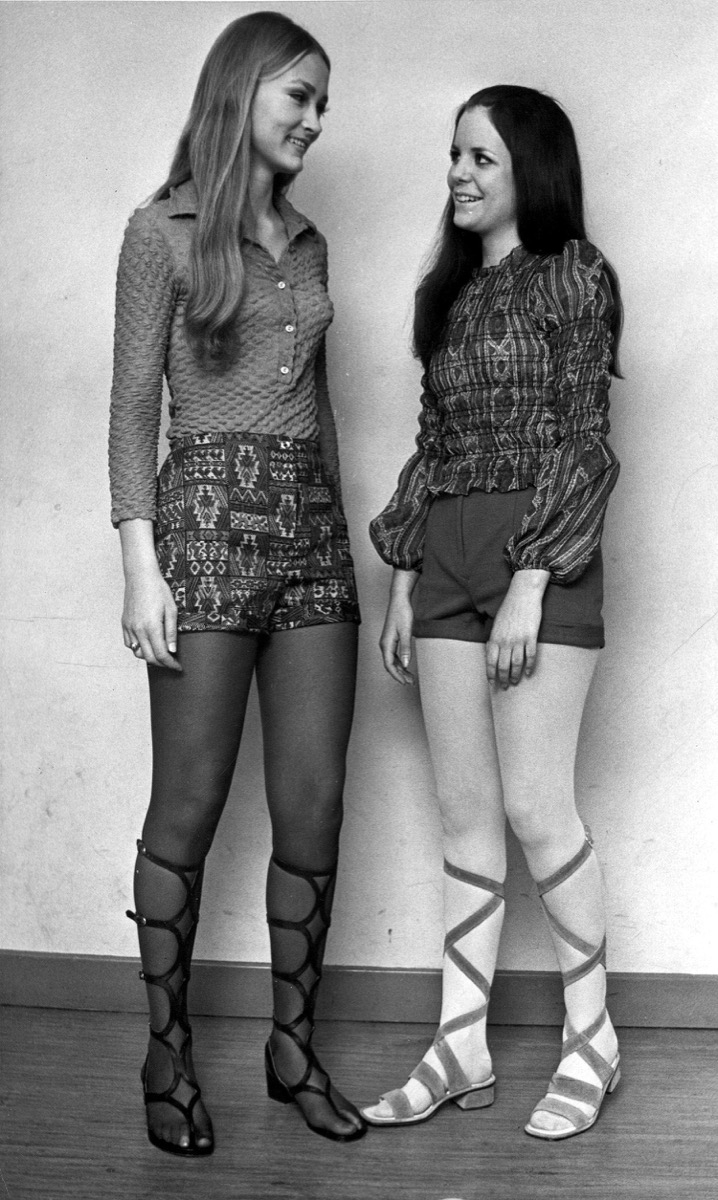
Who wears curt shorts? The women of the 1970s, for sure. According to Smithsonian magazine, the style also inspired several hitting songs of the time, including James Brownish'due south "Hot Pants (She Got to Use What She Got to Get What She Wants)," Bobby Byrd's "Hot Pants/I'grand Coming, I'm Coming," and the Dramatics' "Hot Pants in the Summertime." They make even more than of an embarrassing statement with these gladiator sandals and stockings.
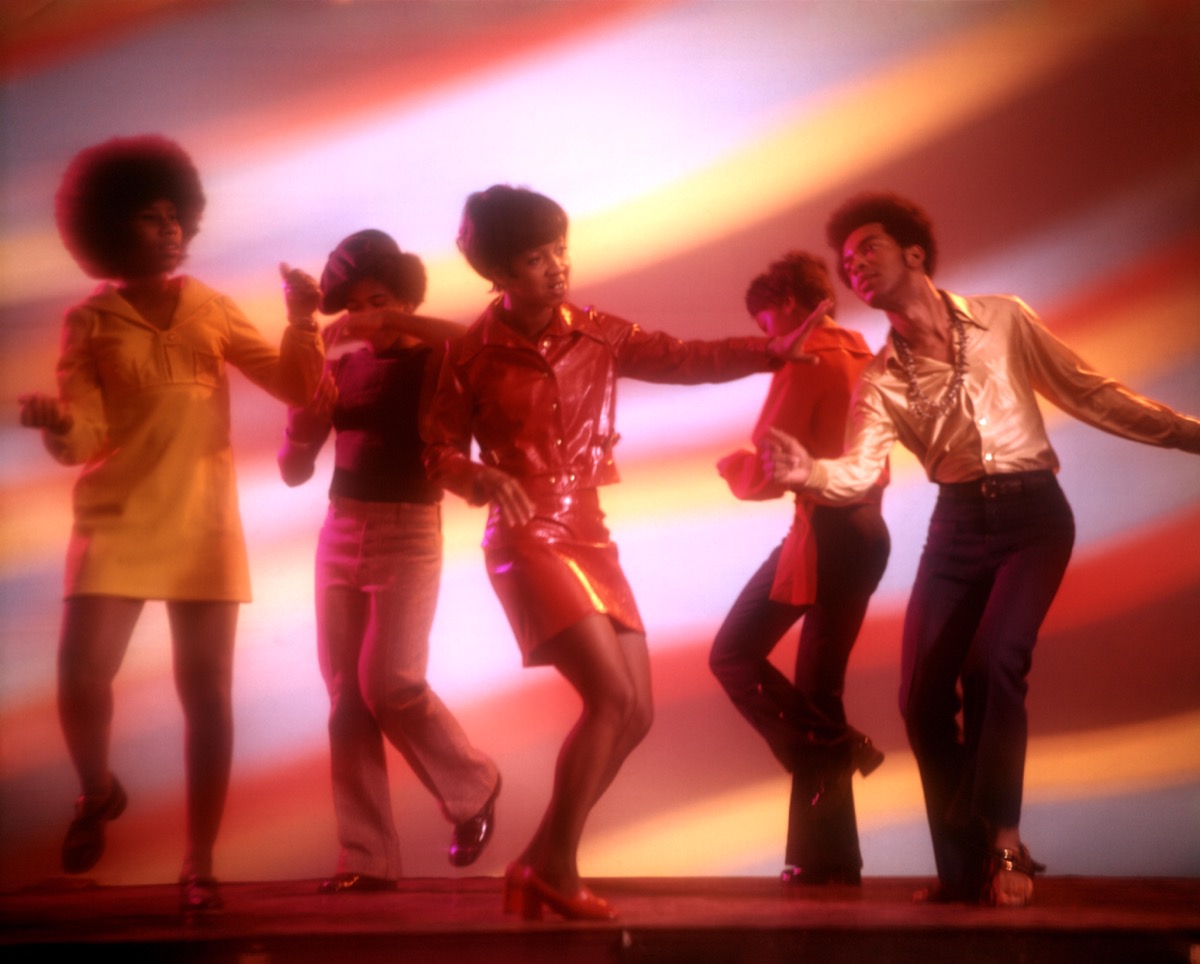
The '70s-era Swedish glam group ABBA was no stranger to glitzy costumes, but their flared flashy bell bottoms were particularly memorable. Sure, flares and bell bottoms seem to come and get, only the '70s iterations were louder than the balance.
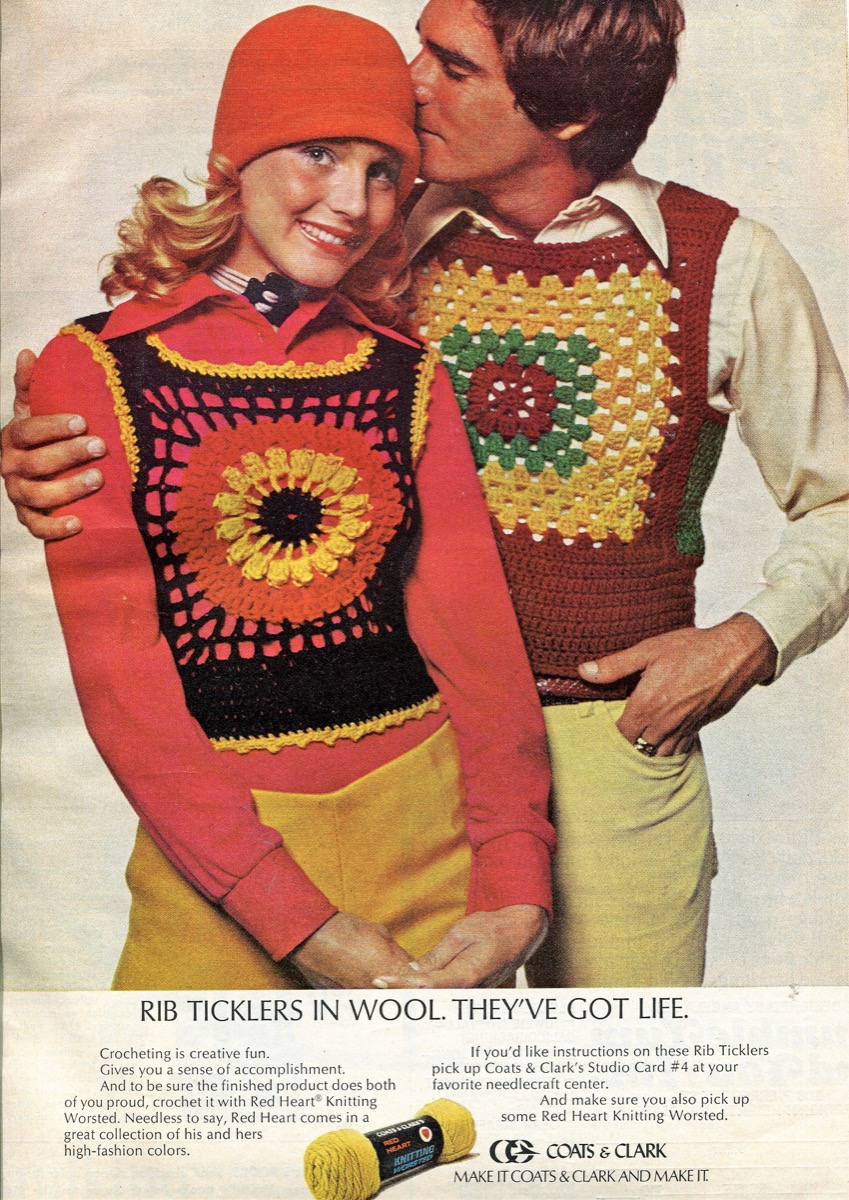
"In the 1960s and 1970s crochet took off every bit a freeform means of expression," notes the Crochet Guild of America. And while we sympathize crocheted rugs and tapestries—these abode accents, afterwards all, remain popular today—we still can't wrap our heads around the idea of crocheted clothing. There's really just nil about crochet—between its lack of coverage and typical heaviness—that makes it appealing as dress. These Coats and Clark models are real troopers.
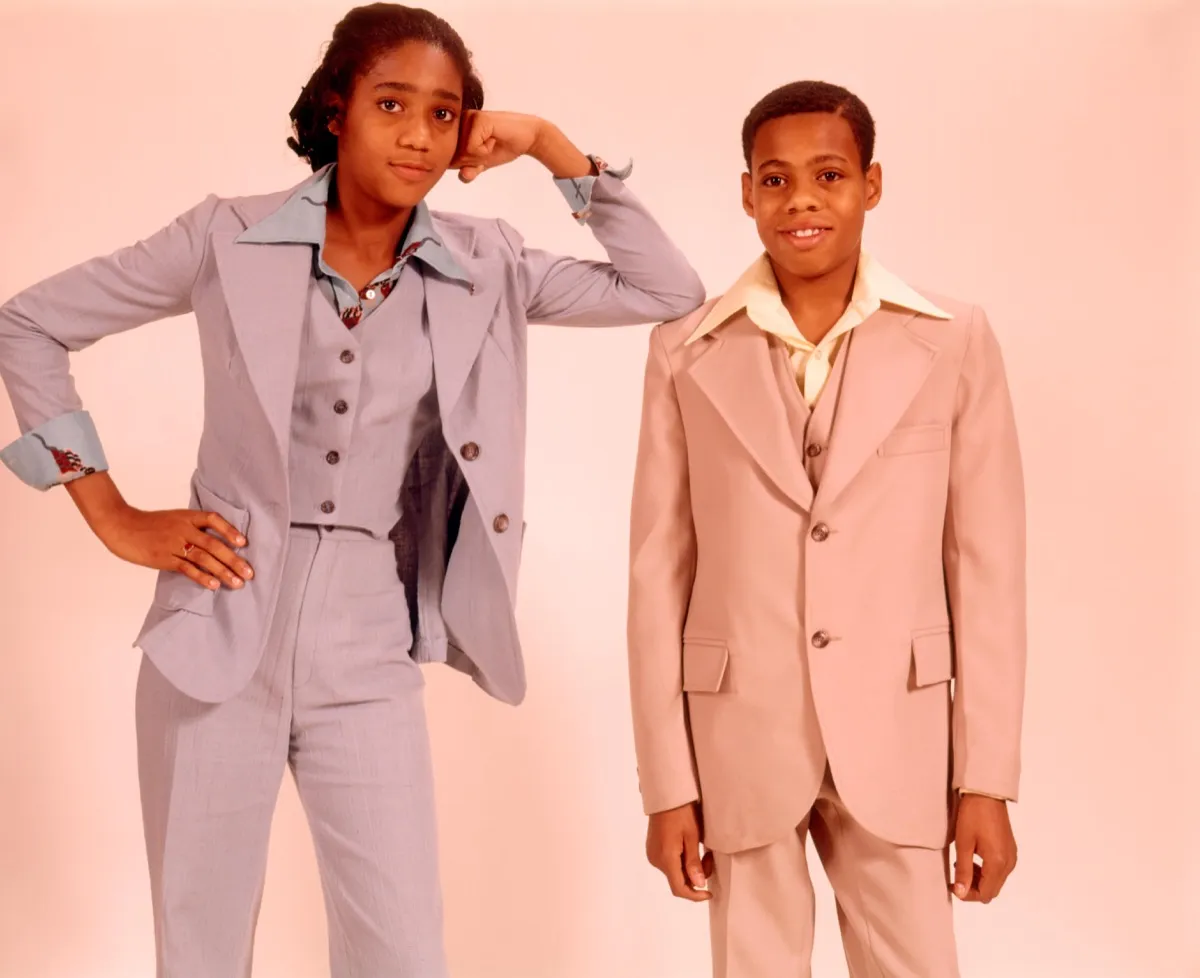
In the mid- to late 1970s, the infamous men's leisure suit was everywhere, which The New York Times referred to as "the almost talked‐about, written‐virtually, sketched, photographed and analyzed category of men's clothing." If you're unfamiliar with this fashion gem, it was frequently a three-piece ensemble with big safari-like pockets and even bigger lapels. And male child, are we big-time thrilled information technology's no longer in fashion.
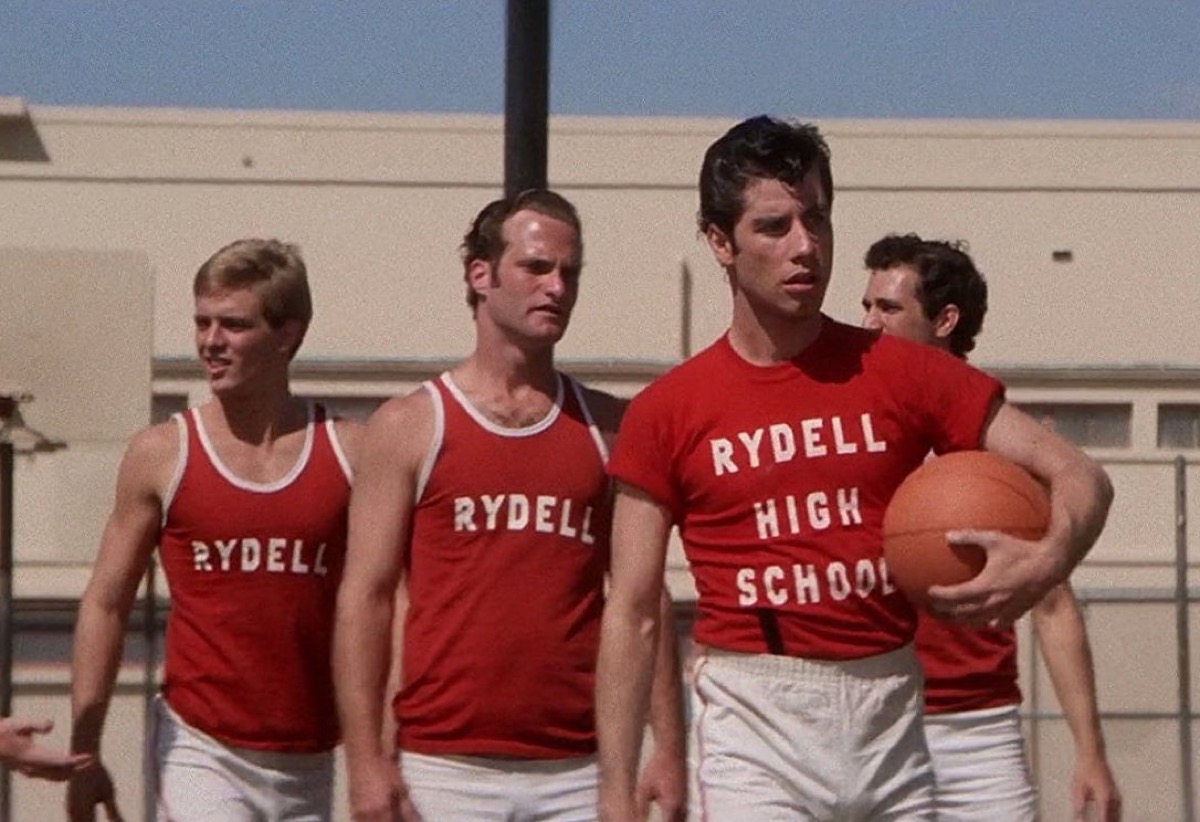
In the '70s, the only way to get customized T-shirts was to make them yourself. As Grayer Moore writes in her book, iron-on letters were placed on everything from hats to jackets to tote numberless, making whatever statement '70s kids were feeling at the time. The messages never looked quite right, even later on the hours spent trying to spell out your graduation twelvemonth or your breakdancing alter ego proper noun. They didn't even work on Danny Zuko (John Travolta) inGrease!
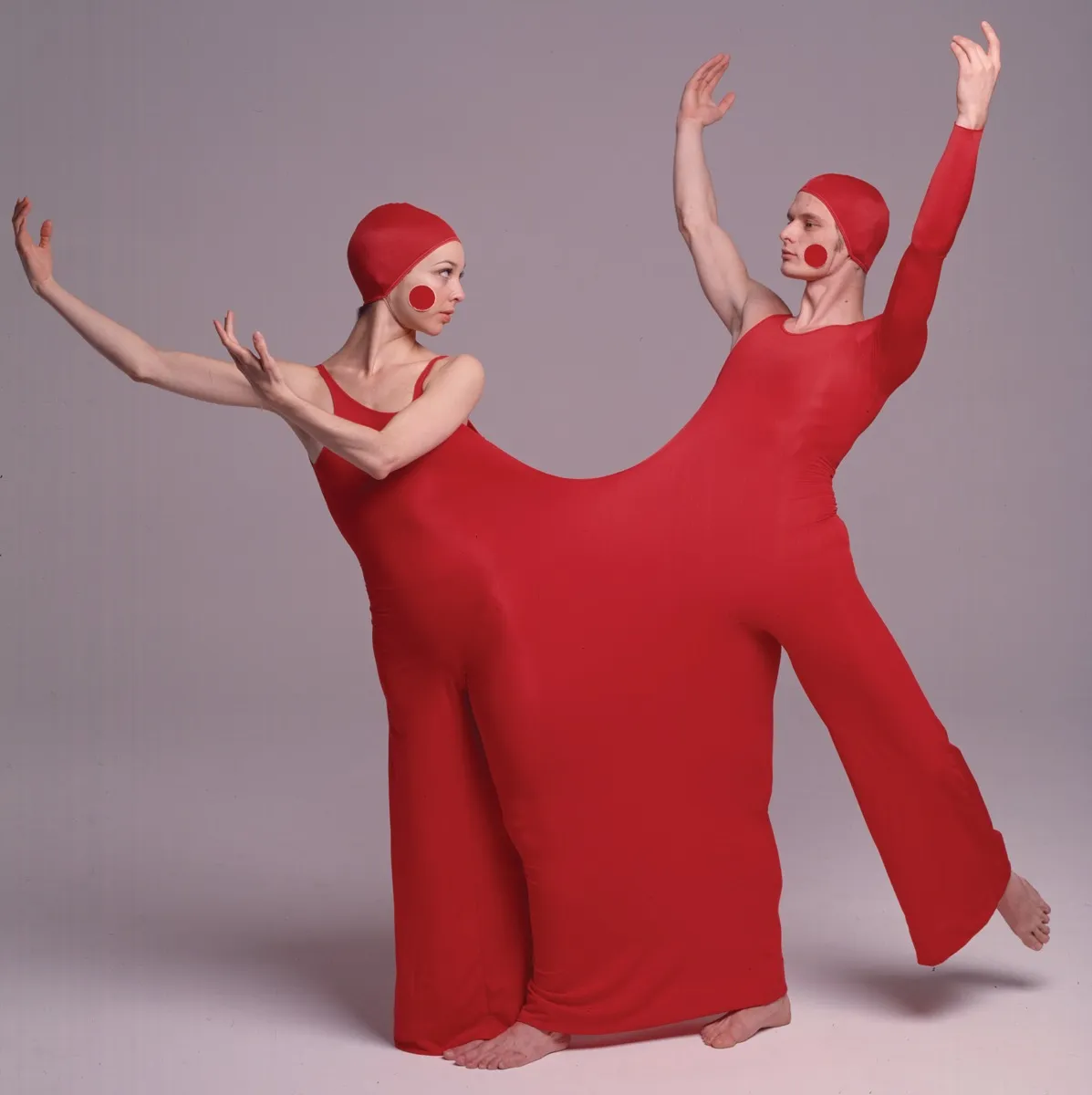
The most shocking look of 1976 was hands designer Rudi Gernreich'south duotard, which is essentially a unitard, except with three legs. Oh, and it was besides meant to be worn by 2 people: each person got their own leg, and then shared the middle one. It was made for the Bella Lewitzky Trip the light fantastic Company for a operation called Inscape, but it quickly became the talk of the manner world. Because, well, await at it!
In the summer of 2019, the Skirball Culture Heart in Los Angeles hosted "Fearless Fashion," an exhibition of Gernreich's piece of work, which also includes the controversial monokini. For a fleeting moment, the duotard could be seen in all of its glory.
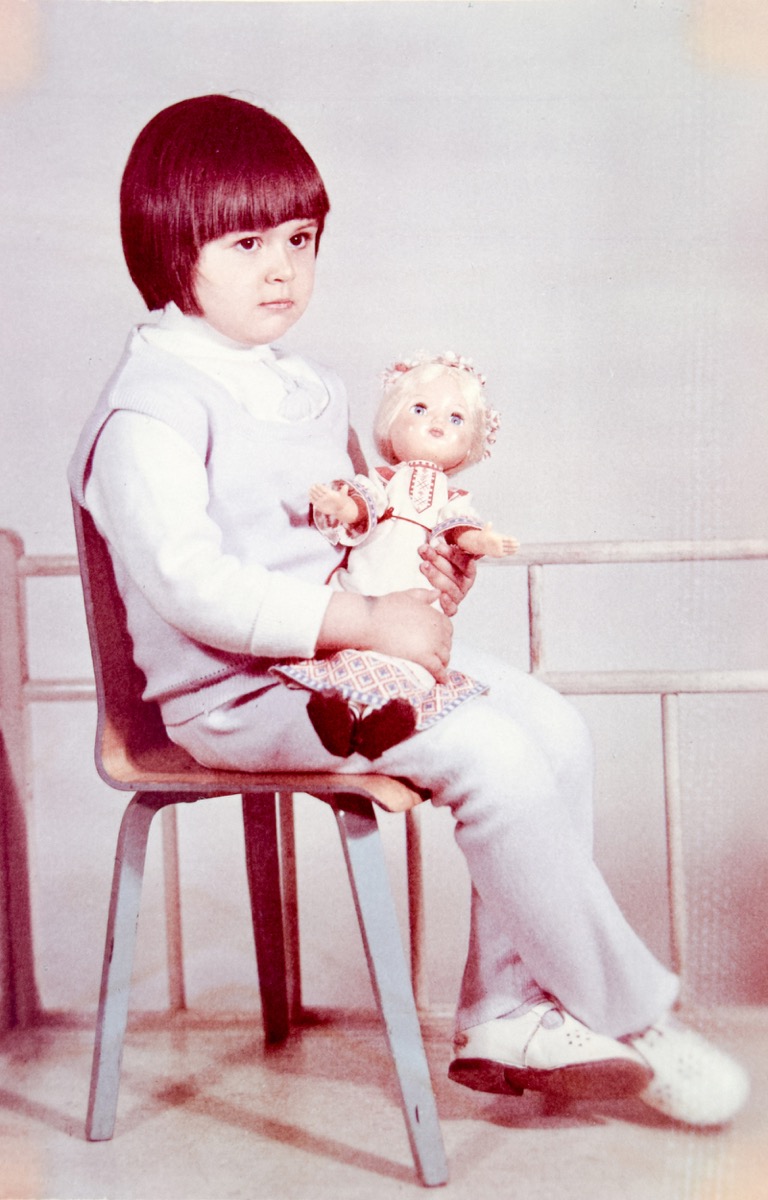
If y'all lived through the '70s, chances are high your mom put a bowl over your caput and used scissors to cut around the edges. Information technology was the haircut that won Olympic figure skaterDorothy Hamillthe gilded in 1976, and caused a very embarrassing hair trend every bit a issue.
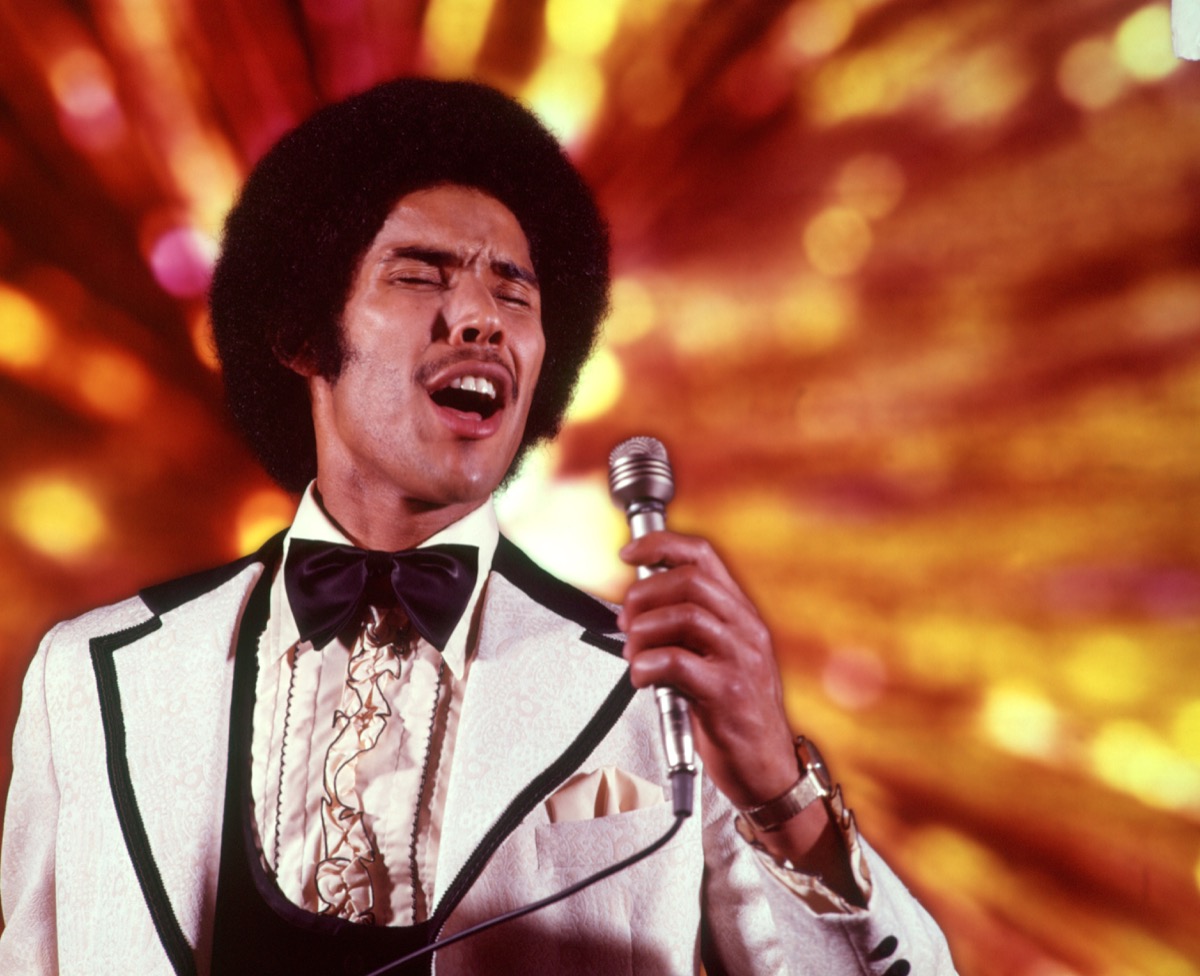
According to Business Insider, these pirate-inspired crimes against fashion were all the rage in the late '70s and early '80s. "Huge, floppy bow ties, colorful patterned jackets, shirts with ruffles and lace, and trousers that looked more like bell bottoms became much more prevalent," the website notes. "The typical tuxedo in the '70s ordinarily had at least two of these elements, if non all of them."
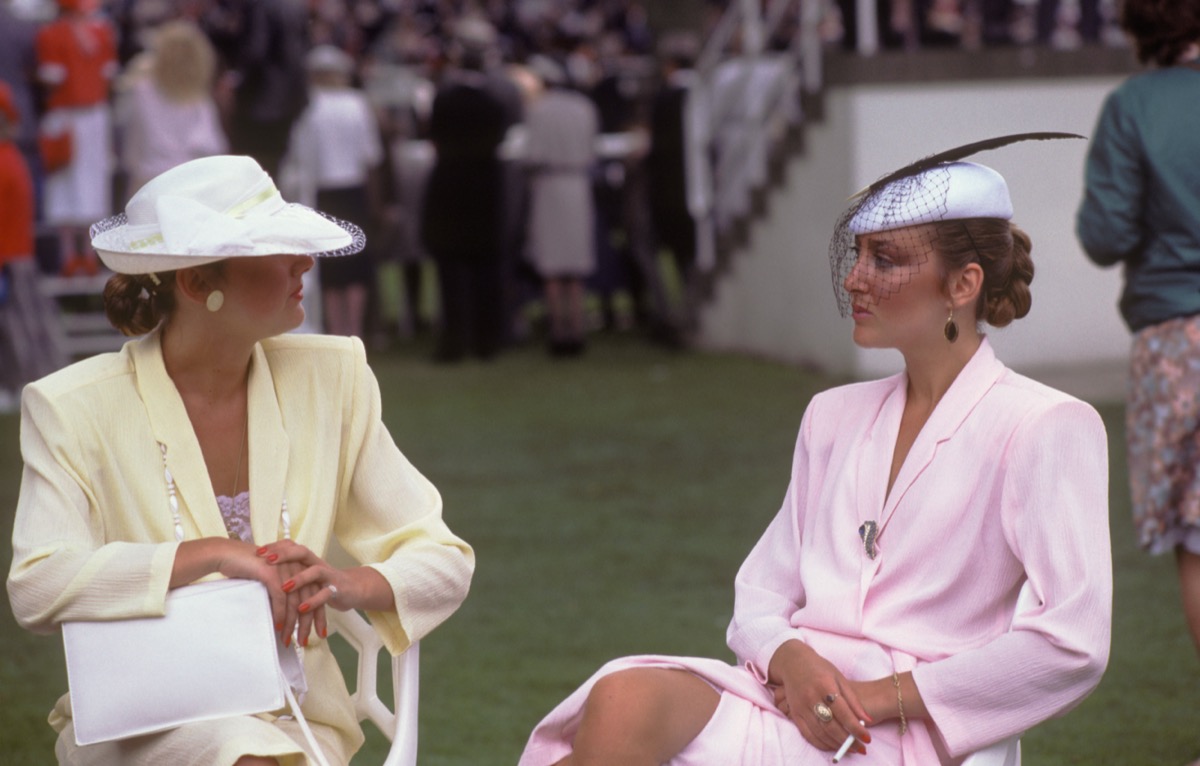
Nosotros look back and laugh, but shoulder pads were once championed asthe large matter. According to a 1979 Washington Mail service trend piece, "Shoulder pads—believe it or not—will brand yous seem taller, your waist announced slimmer, and will anchor your clothes." It's no wonder we all bought into this very embarrassing trend, includingPrincein the massive '80s movie Majestic Rain.
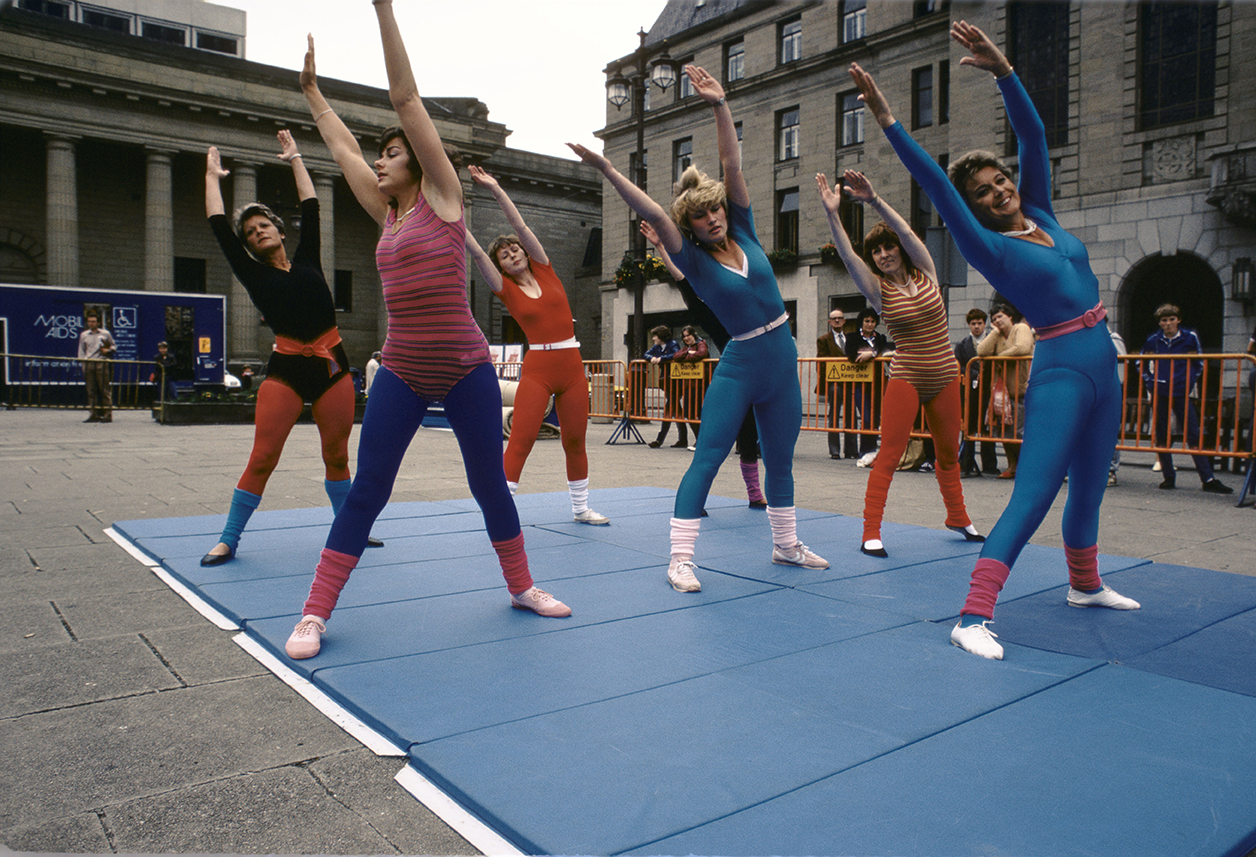
Movies frequently inspire fashion, and Fame—the 1980 picture nearly loftier-strung competition at a New York Metropolis performing arts high school—did exactly that, ushering in the conditioning habiliment craze of the decade. Legwarmers were the eye of the look, and the eye hasn't yearned to bring back this accessory in the 40 years since.
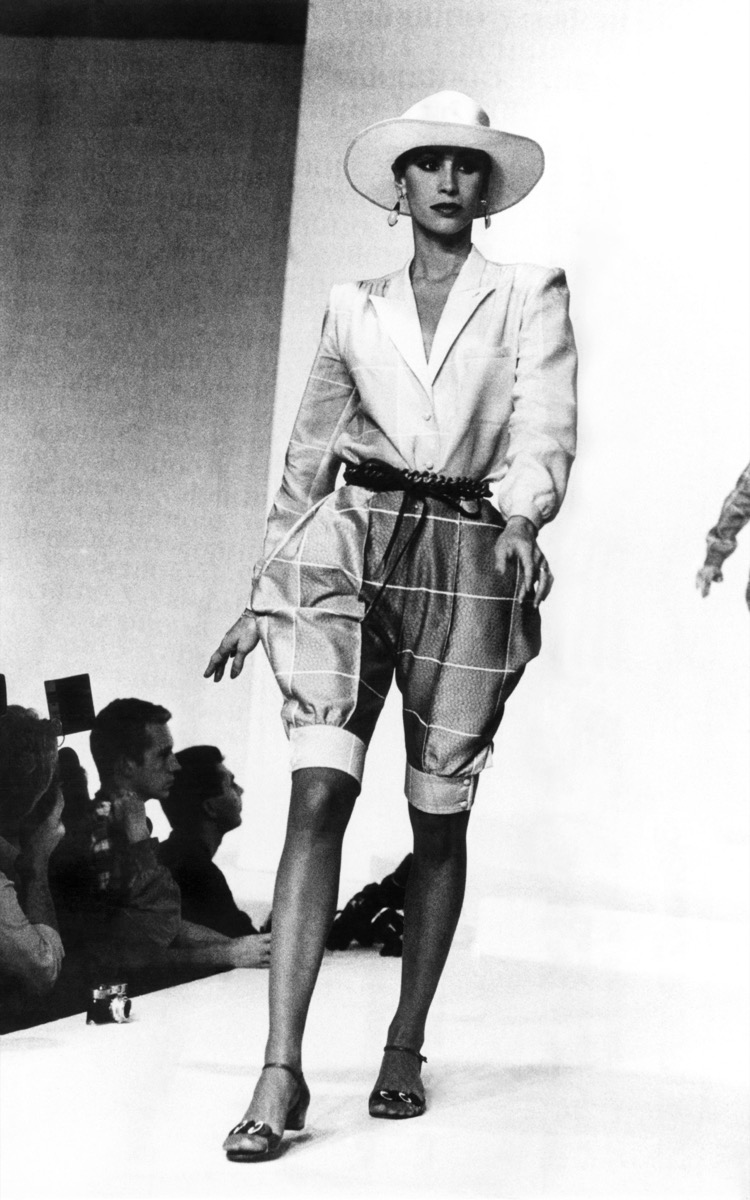
There has long been something somewhat glamorous about equestrian fashion. Just these incredibly broad-hipped jodhpurs that made their style to the runway in the 1980s took it to a new level. In 1985, one reporter wrote an commodity for Cincinnati Mag titled "Cruel Pants: The Unkindest Cutting of All" about these riding pants gone wrong.
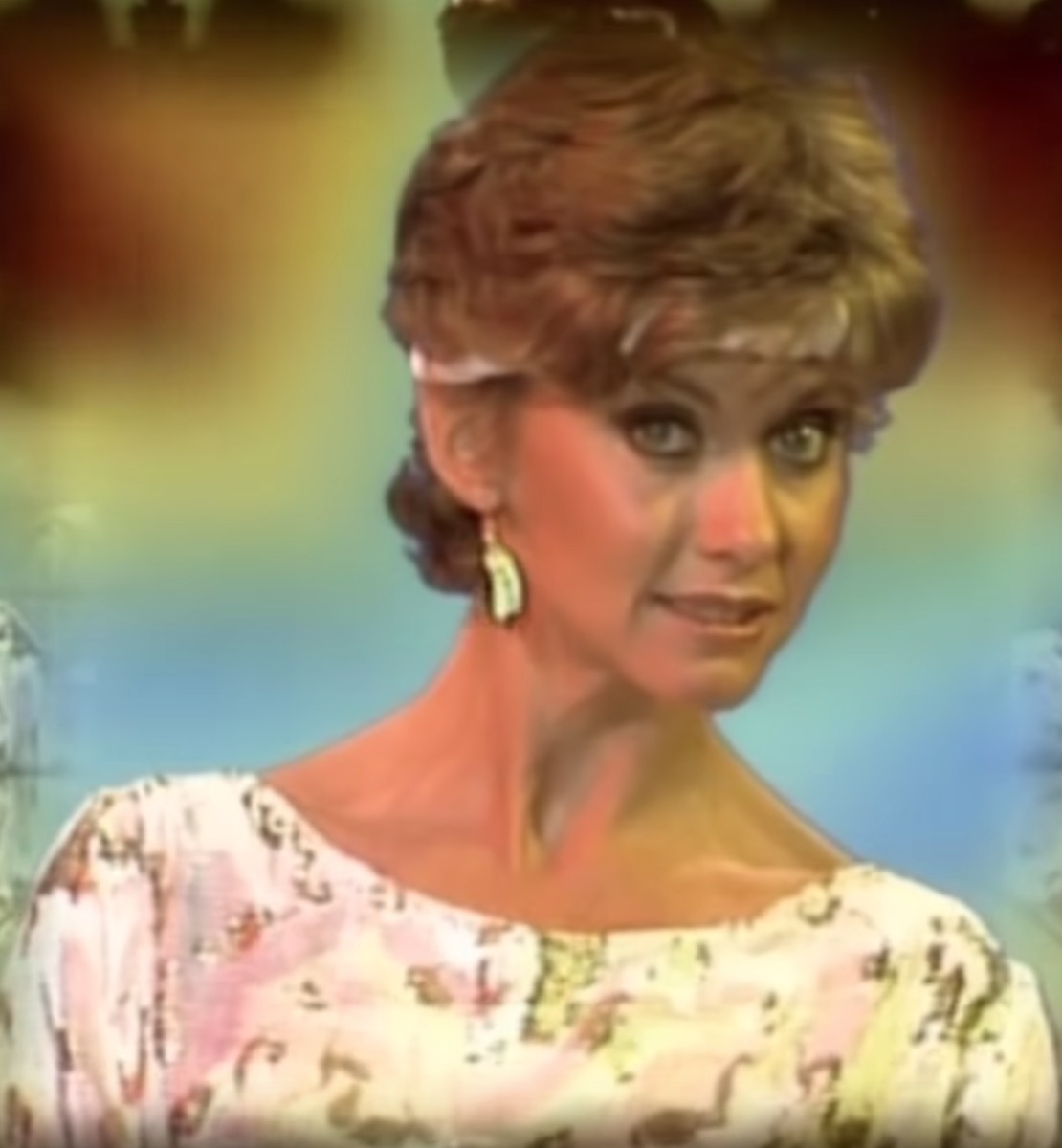
In 1981,Olivia Newton-John's blast hitting "Physical" cemented the trend that Fame started: casual workout vesture. (Today, you'll recognize it by its more plumbing equipment proper noun, "athleisure.") In the music video for the vocal, Newton-John rocks a headband. By the side by side year, the sporty accessory became insanely pop—both in and out of the gym. Thankfully, athleisure has evolved.
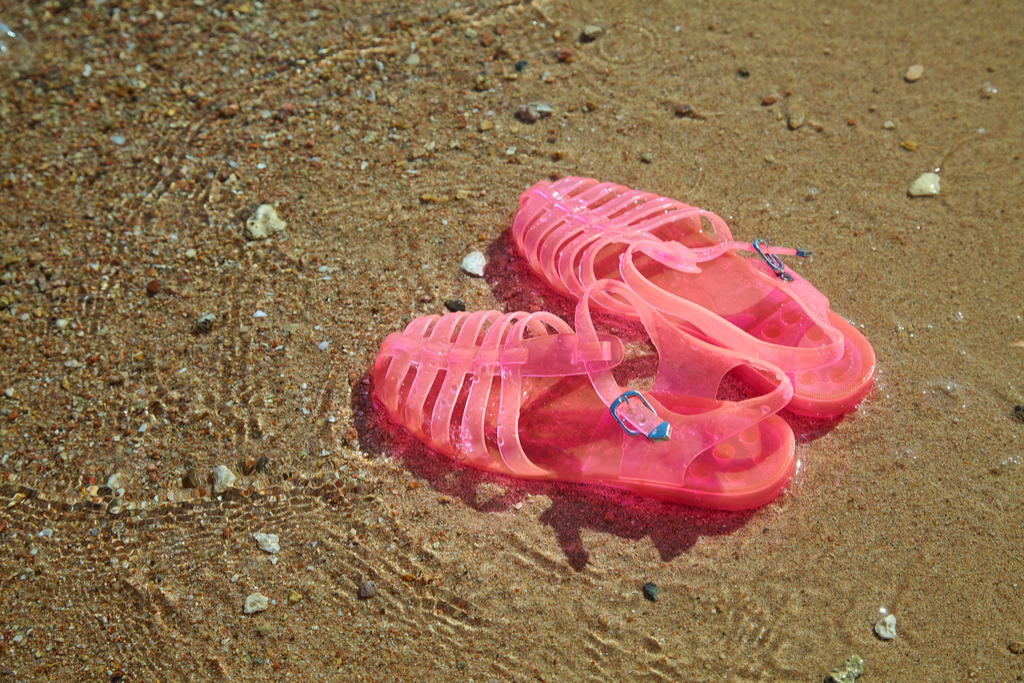
In 1981, a former bank president named Preston Haag Sr. went looking for a new business organization venture. He traveled to Brazil, where he noticed all the young women wearing bright plastic shoes and decided to strike a deal with the local manufacturer to bring them to u.s.a., according to the Ocala Star-Banner. Haag introduced the footwear at the 1982 Earth's Off-white, only it wasn't until 1983, after Bloomingdale's ordered two,400 pairs of jellies, that the trend took off. Soon plenty, everyone learned how painful and sweaty the style was.
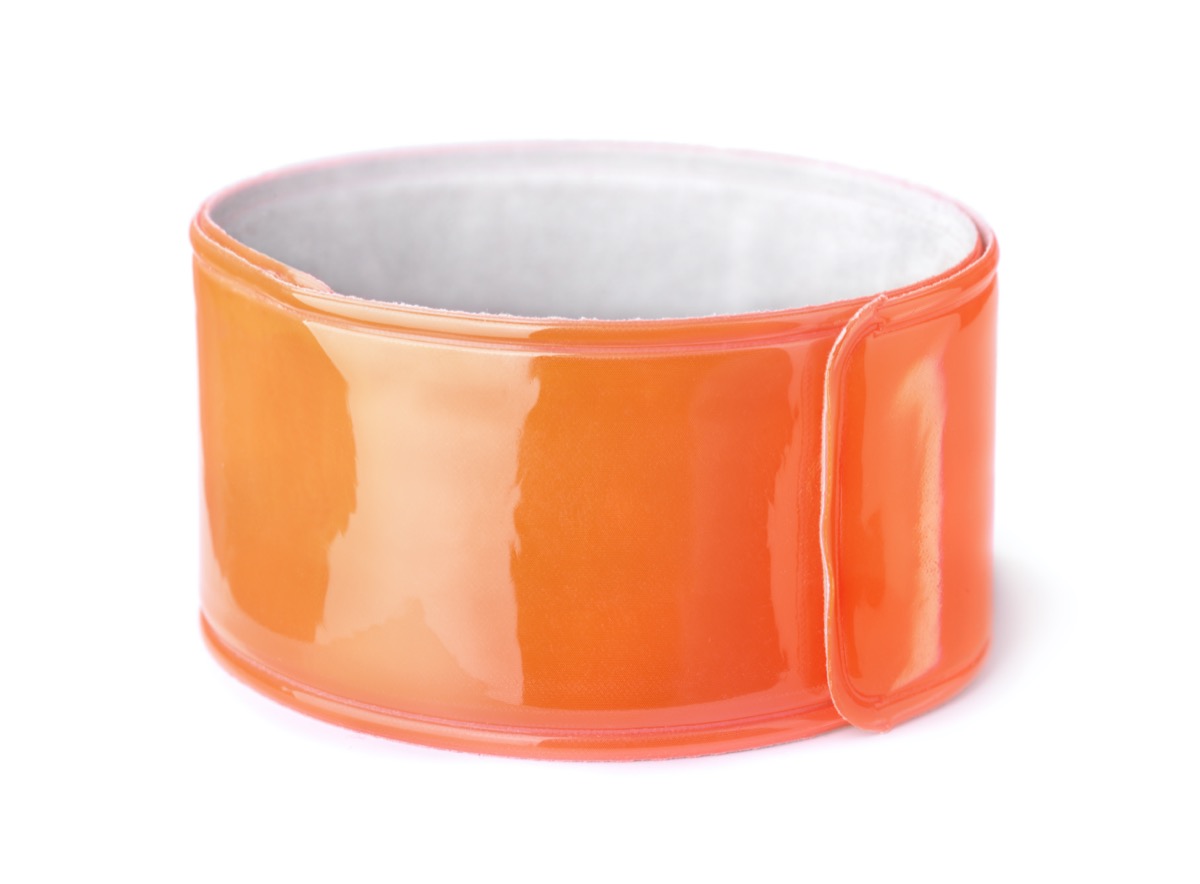
If you grew up in the '80s or early '90s, chances are you had at least one slap bracelet. This bizarre accessory, described by The New York Times every bit "basically a Venetian blind with an attitude," was accidentally invented in 1983 past a high schoolhouse shop teacher from Wisconsin. He showed his cosmos to an agent who represented toy inventors, and it wasn't long before children everywhere were slapping their wrists with bendable plastic—that is, before they were banned past teachers across the state.
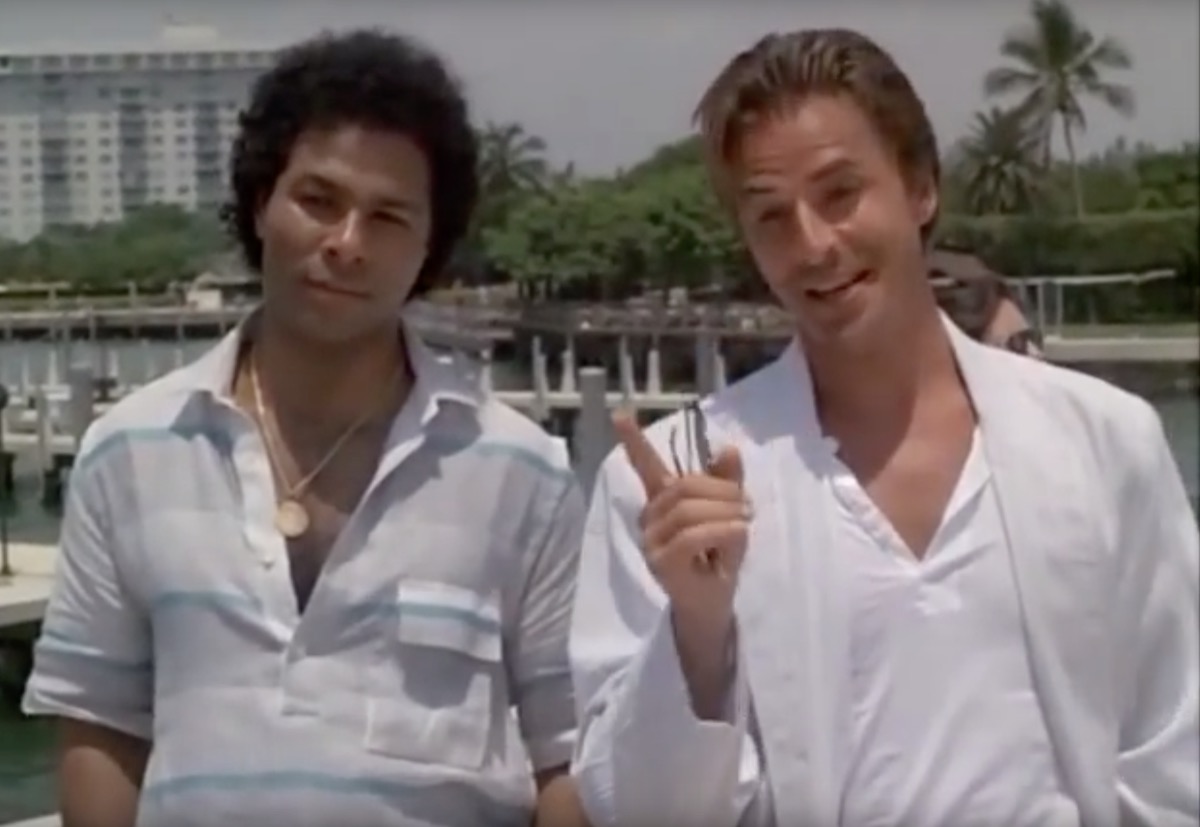
Soon afterwards Miami Vice made its debut, pastel suits for men started hitting the runways in the mid-'80s—and the sidewalks, as well. According to Esquire, the wildly popular show, which ran from 1984 to 1990, singlehandedly prompted men to clothing double-breasted suits, loafers, and dramatic V-necks in a variety of soft, pastel colors in an attempt to emulate Sonny Crockett (Don Johnson). But in the '80s, folks.
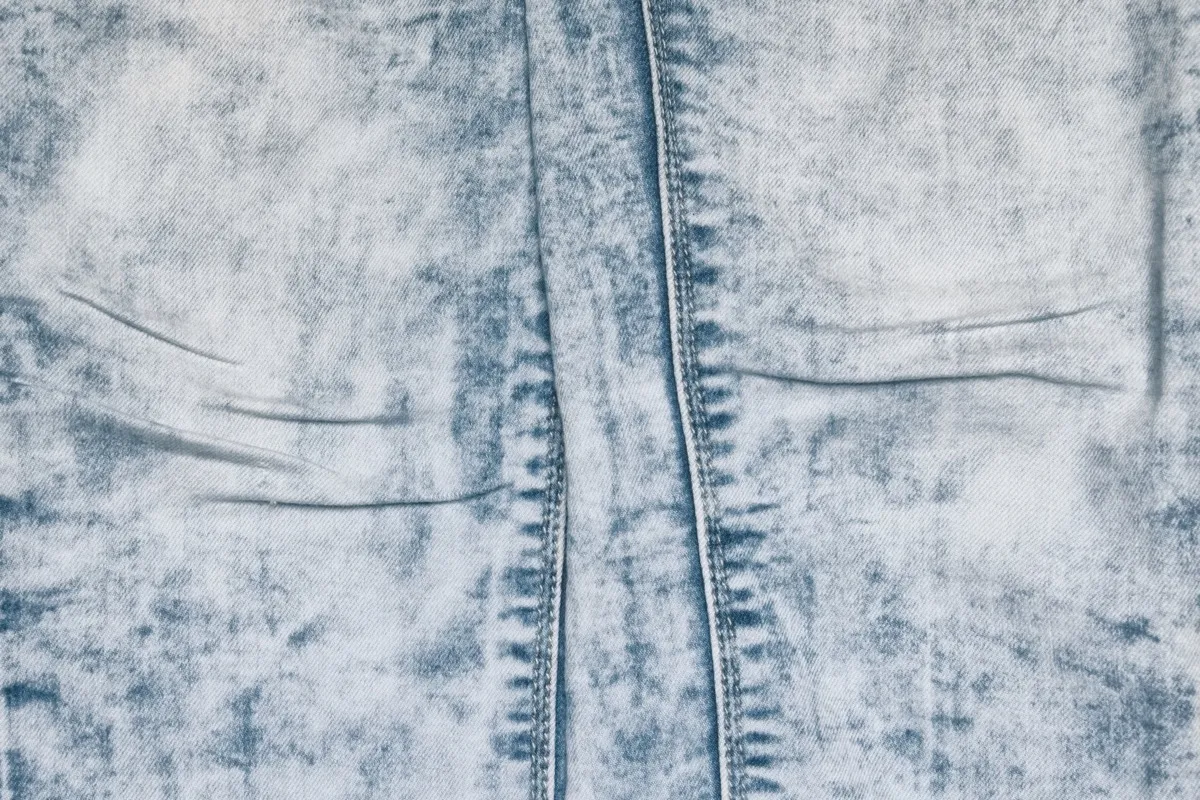
Acid-wash denim was no doubt pop throughout the entirety of the 1980s, only it was everywhere in the middle of the decade. Nowadays, we're a bit wiser, and realize that, yeah, light jeans can look good, just jeans faded to the point of corrosion, less and then.
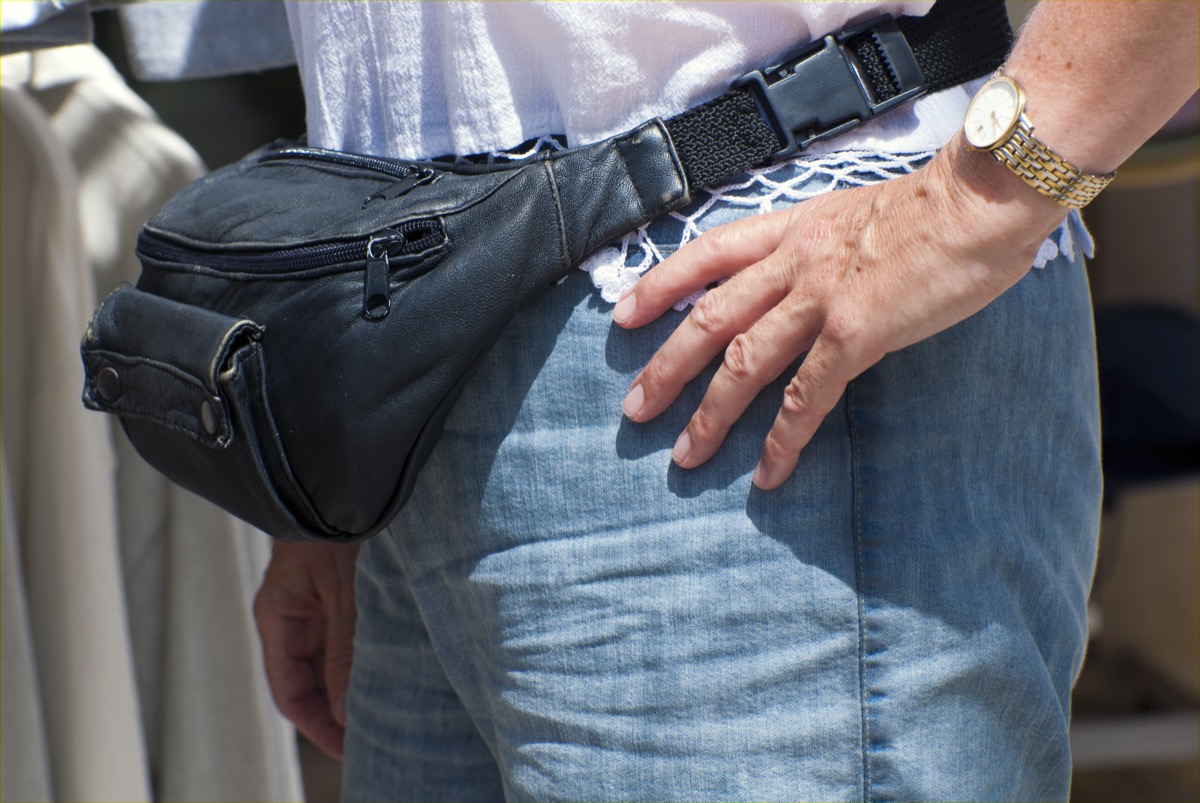
Unremarkably made from nylon, this 1980s accessory was "durable, colorful, practical—and non chic," Vice bluntly points out. "Their functionality meant they were quickly adopted by tourists, on whom the fanny pack was often a feature of a sloppily-assembled or sick-fitting outfit of T-shirt and baggy shorts. Tourism in both New York and Japan boomed during the '80s, maybe solidifying a worldwide prototype of the sloggy American cramming their belongings in a cheap little pocketbook that rested gently on the butt." That may be harsh, but it's as well not incorrect.
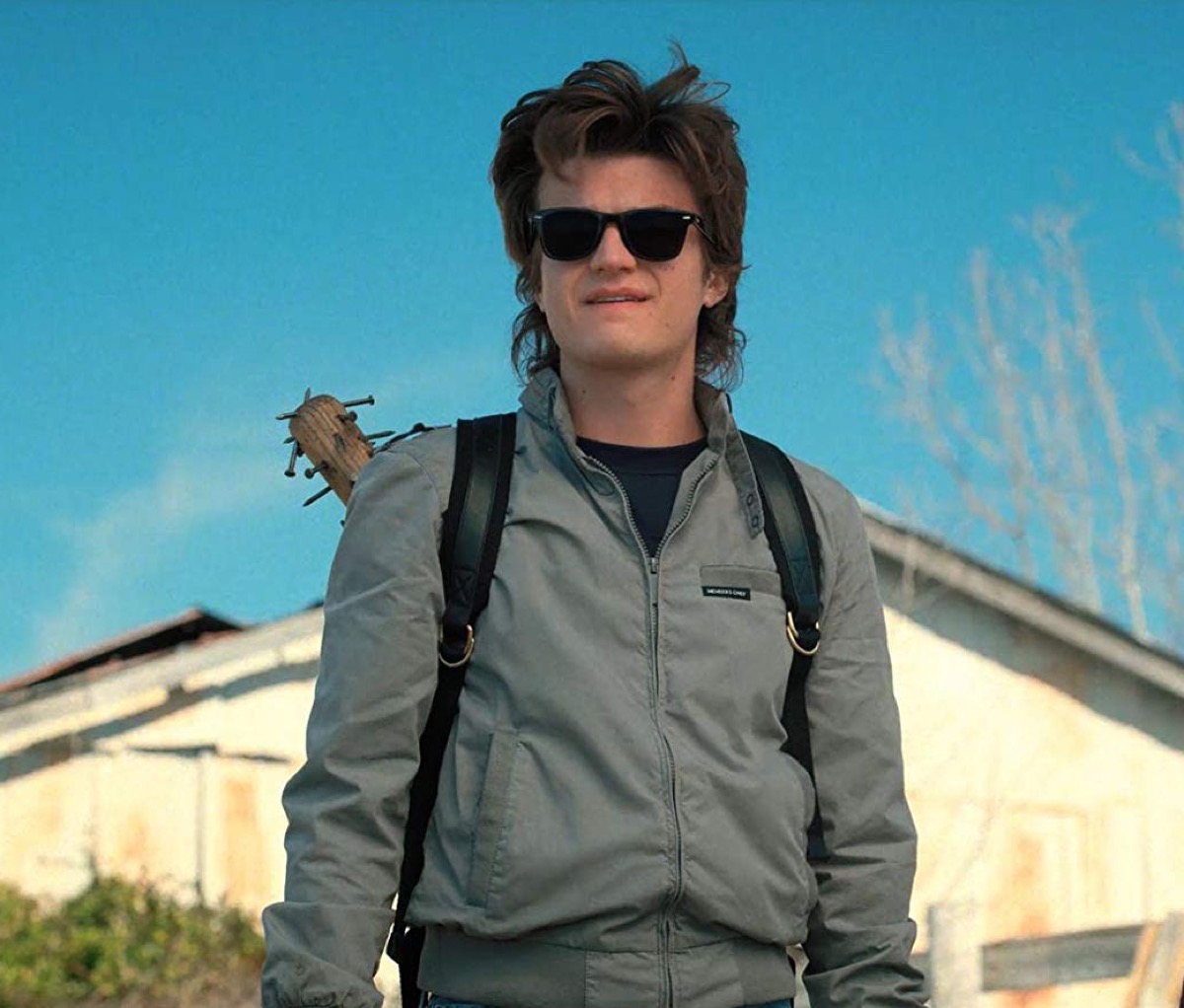
Those who grew upwards in the 1980s understand merely how wellStranger Things, Netflix'south pop '80s-set sci-fi horror show, nails the decade's style—similar the Members Only jacket championed by Steve "the Hair" Harrington (Joe Keery). It's the type of garment that instantly sends viewers dorsum to the era. According to Mental Floss, in 1987, Members Just's sales jumped 15 per centum and some stores reported increases of up to 82 percent. But it wasn't long before guys of the '80s wondered why they were shelling out $55 for this not-so-special jacket.
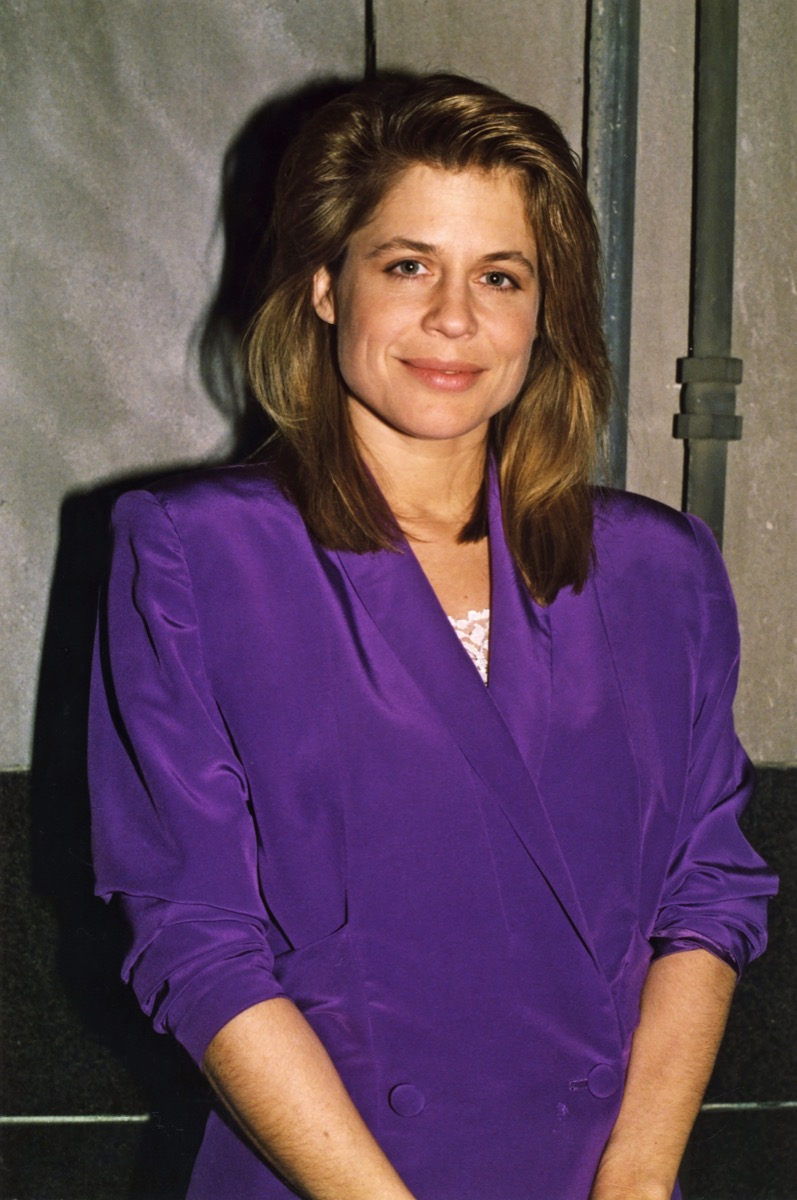
Bright, assuming, double-breasted power suits were a must-vesture for women in the tardily '80s, as seen here on Linda Hamilton, star of 1984's The Terminator. Equally Faddy summed it up: "Defined by its larger-than-life proportions, such every bit its trademark linebacker-reminiscent shoulder pads, at that place were plenty of snobby and brash connotations that came with the corporate costume of the go-big-or-go-dwelling decade."
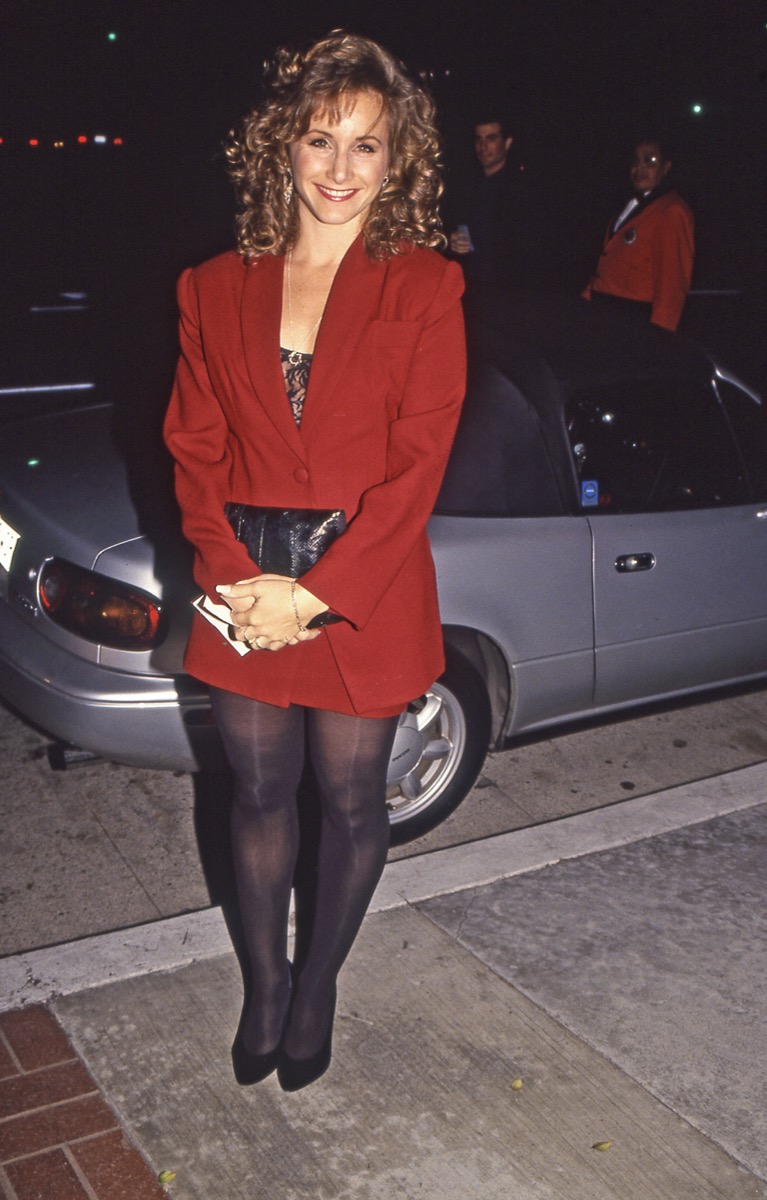
At the time, information technology was seriously sexy. But, in hindsight, information technology seems downright silly. Subsequently all, why wear a suit if you're merely going to wear half of it…and nothing else? Well, that's exactly what women did who wanted to push the boundaries of the power suit in the belatedly '80s and early '90s. They rocked double-breasted blazers and then oversized, they looked like dresses. According to Harper's Bazaar, they usually were only paired with two other accessories: natural makeup and simple gold hoops, a laBeverly Hills, 90210star Gabrielle Carteris (pictured here).

The plow of the decade was not but hammer time, but hammer pants time. Thank you to MC Hammer and his iconic video for the song "U Can't Touch on This," America caught its start glimpse of these incredibly baggy trousers that take been mocked ever since.
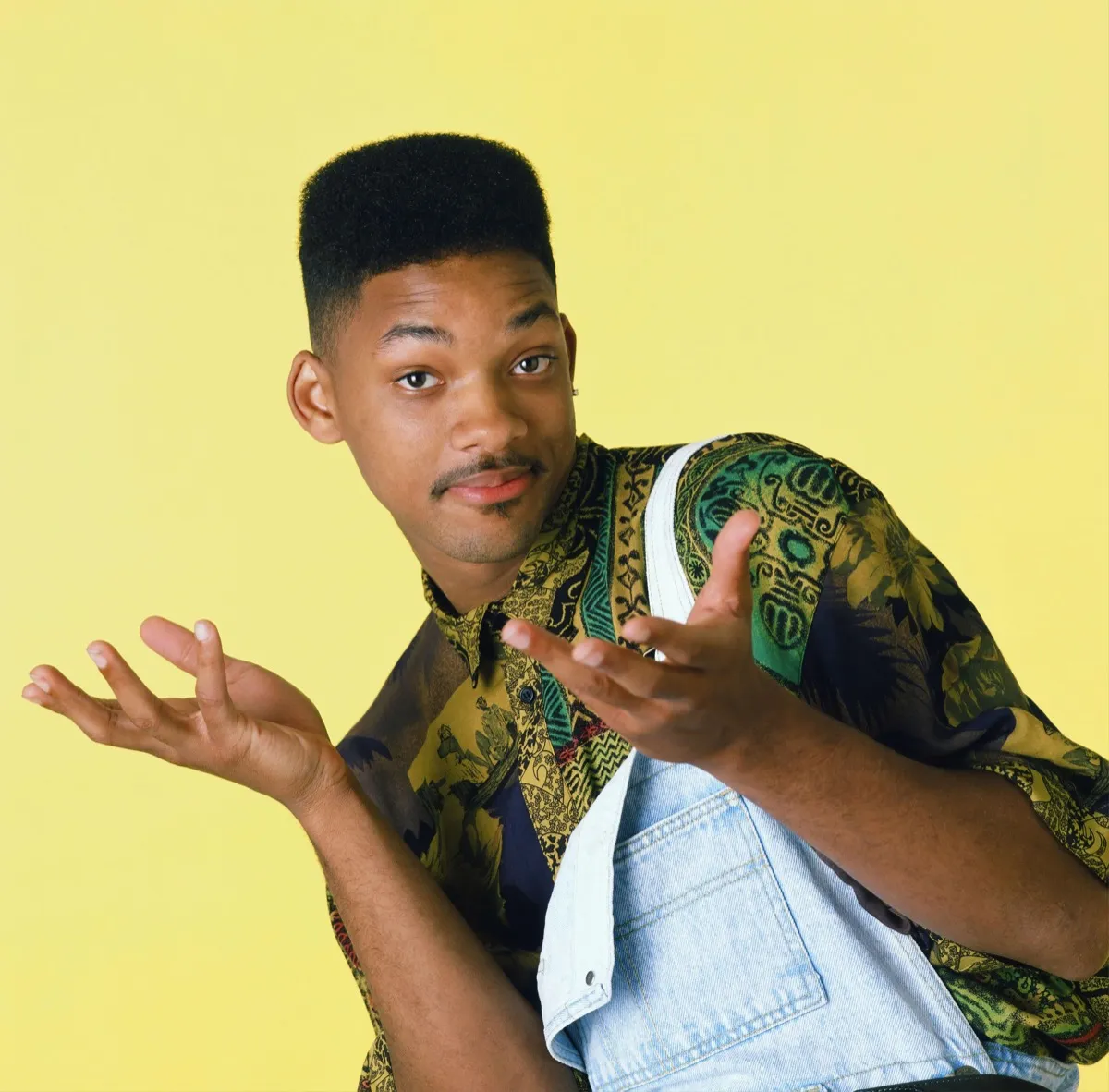
Whether or not y'all worked on a farm, y'all probably wore overalls in the '90s—sometimes with one (or both) of the straps unbuttoned and hanging down. Will Smith, pictured hither, was ane of the forefathers of this trend, which he consistently sported on The Fresh Prince of Bel Airfrom 1990 to 1996.
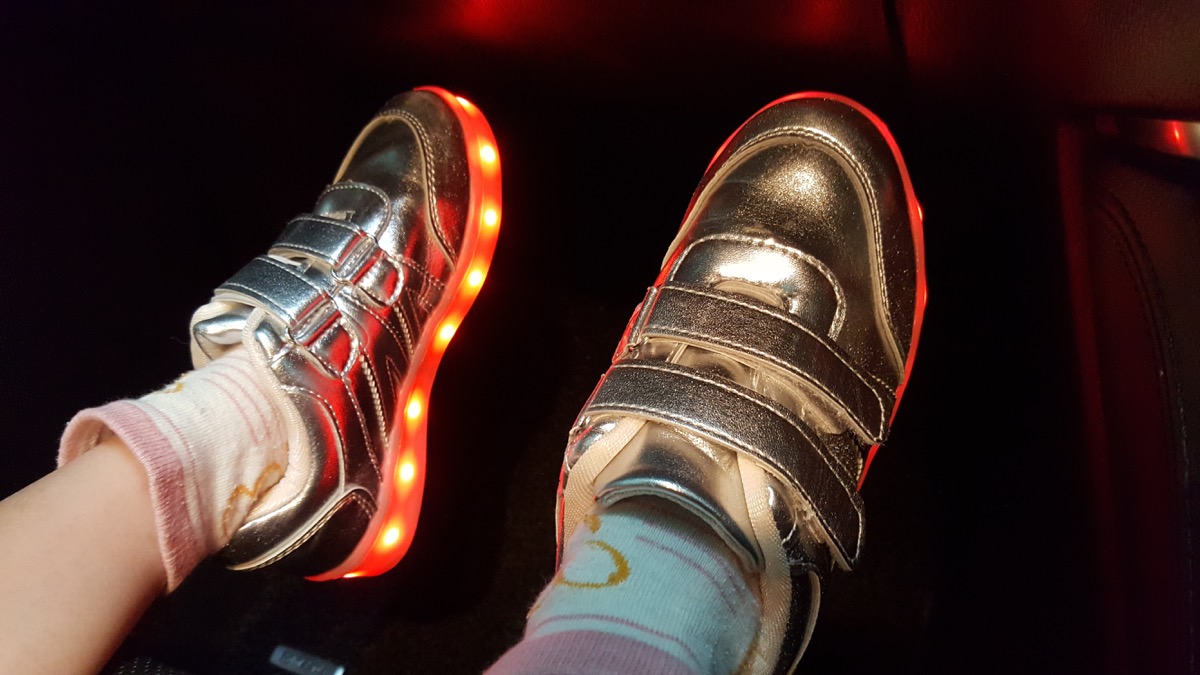
Calorie-free up sneakers made their debut back in 1992, courtesy of sneaker manufacturer L.A. Gear. Their iconic L.A. Lights, which lit upward with every footstep, made '90s kids experience like they were walking right into the future. Ironically, now they simply look supremely dated.
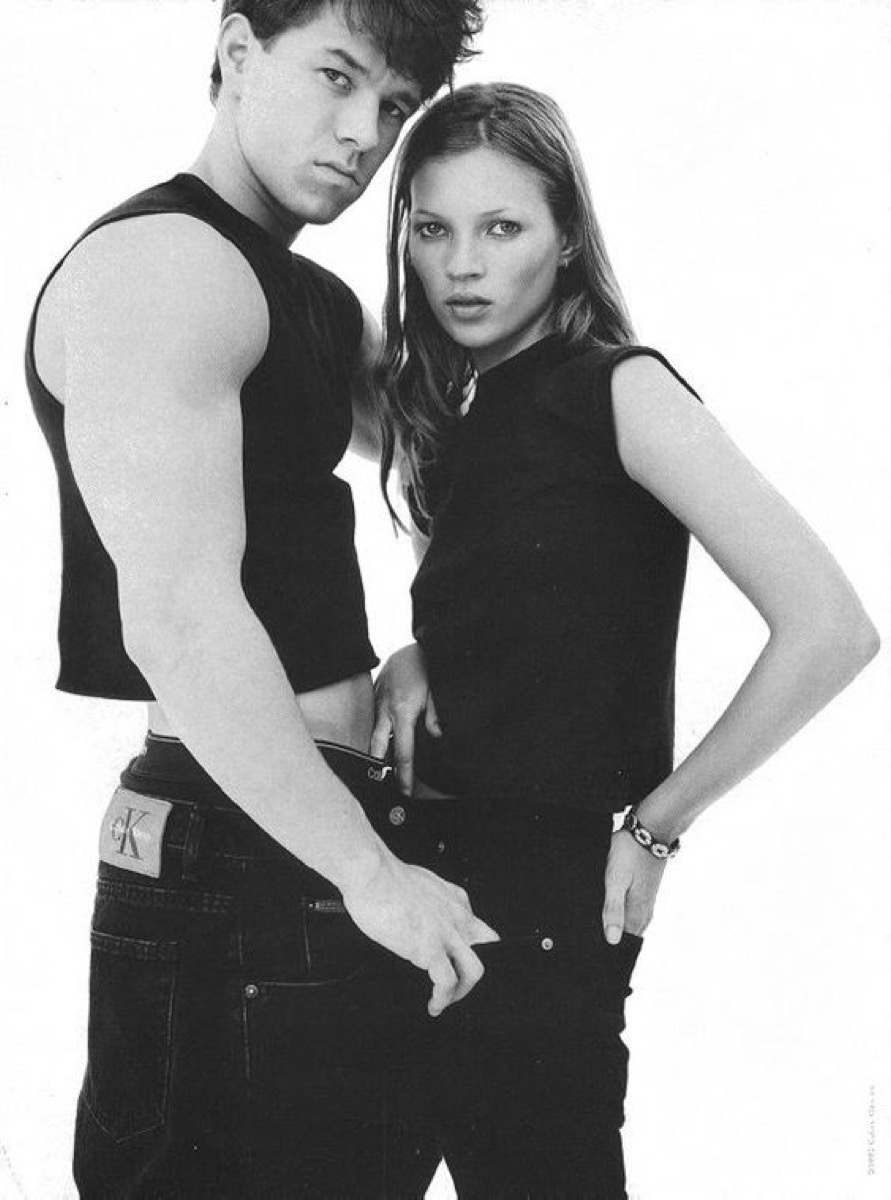
Today, y'all don't see a lot of men wearing crop tops. But once upon a fourth dimension, guys from Volition Smith toMark Wahlberg (pictured here in a 1992 Calvin Klein ad with Kate Moss), commonly rocked the look. Every bitVicki Karaminas, a professor from the School of Design at Massey University in New Zealand, explained to Vice, men'southward crop tops originated in the hyper-masculine environment of football (the global version, non the American ane). "The midriff cut extended their silhouette and enhanced the size of their torso and muscles," she said. "It was a very masculine gesture, or look."
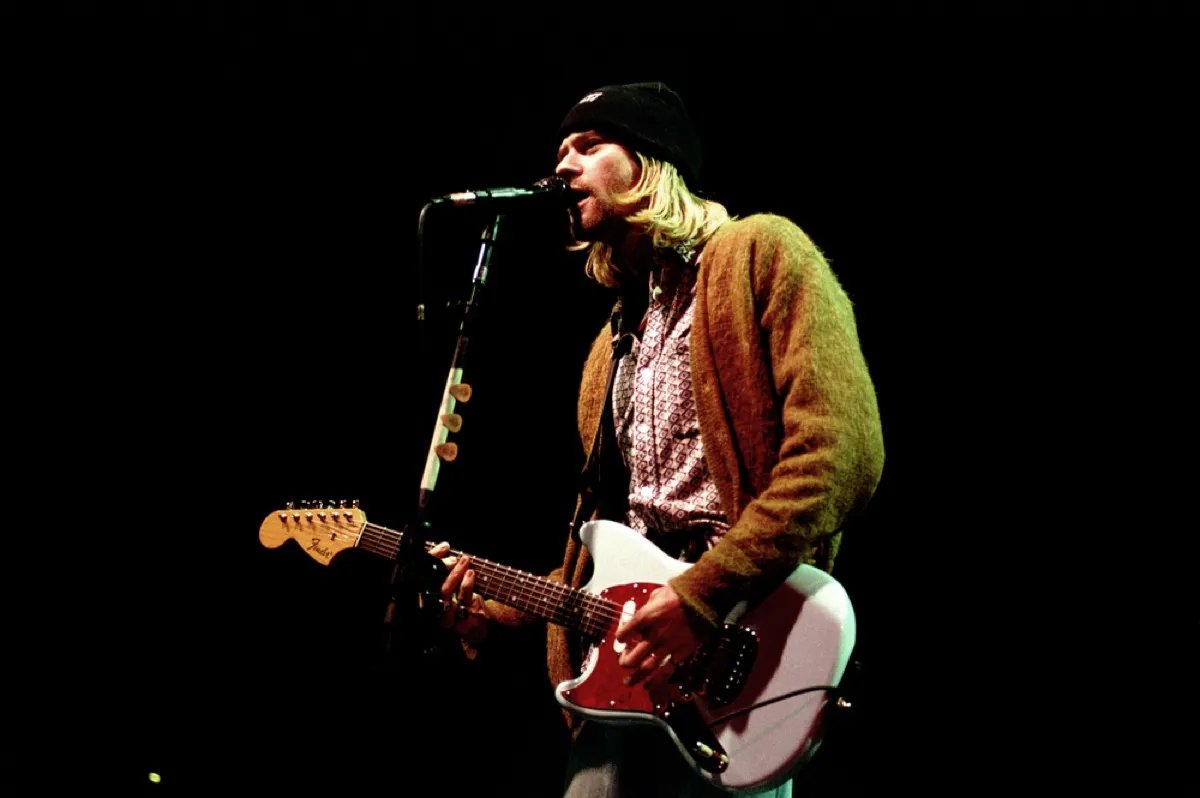
Flannel shirts. Dr. Martens. Roughed up cardigans. Yep, by 1994, fashion was absolutely dominated past the grunge style popularized past rockers similar Nirvana frontman Kurt Cobain (pictured here). But, according toHarper's Bazaar, information technology was a collection byMarc Jacobs—released in 1993—that really cemented the await that nosotros'd only write-off as sloppy today.
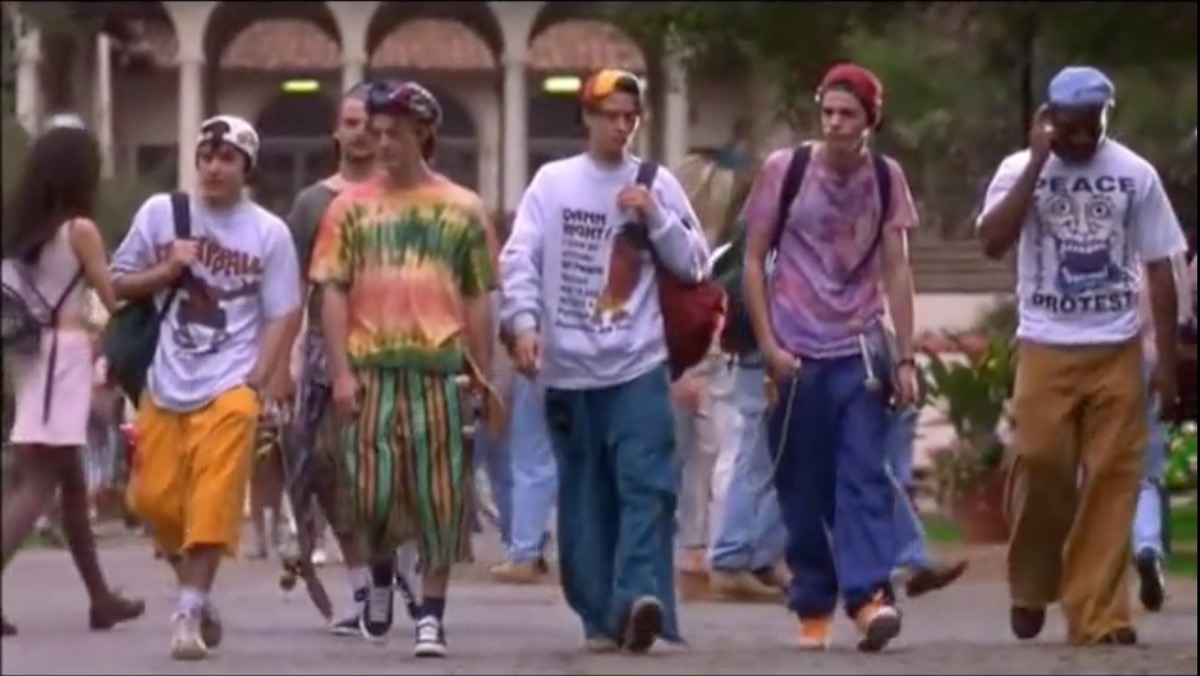
Baggy jeans reigned supreme in the 1990s, and they stayed that way until Cher Horowitz (Alicia Silverstone) finally put them in their place in 1995'southward Clueless (pictured here). She forever rendered them uncool when she said, "Okay, I don't want to be a traitor to my generation and all only I don't go how guys dress today. I mean, come on, it looks similar they just fell out of bed and put on some baggy pants … and we're supposed to swoon? I don't recall so!" Yeah: Asif!
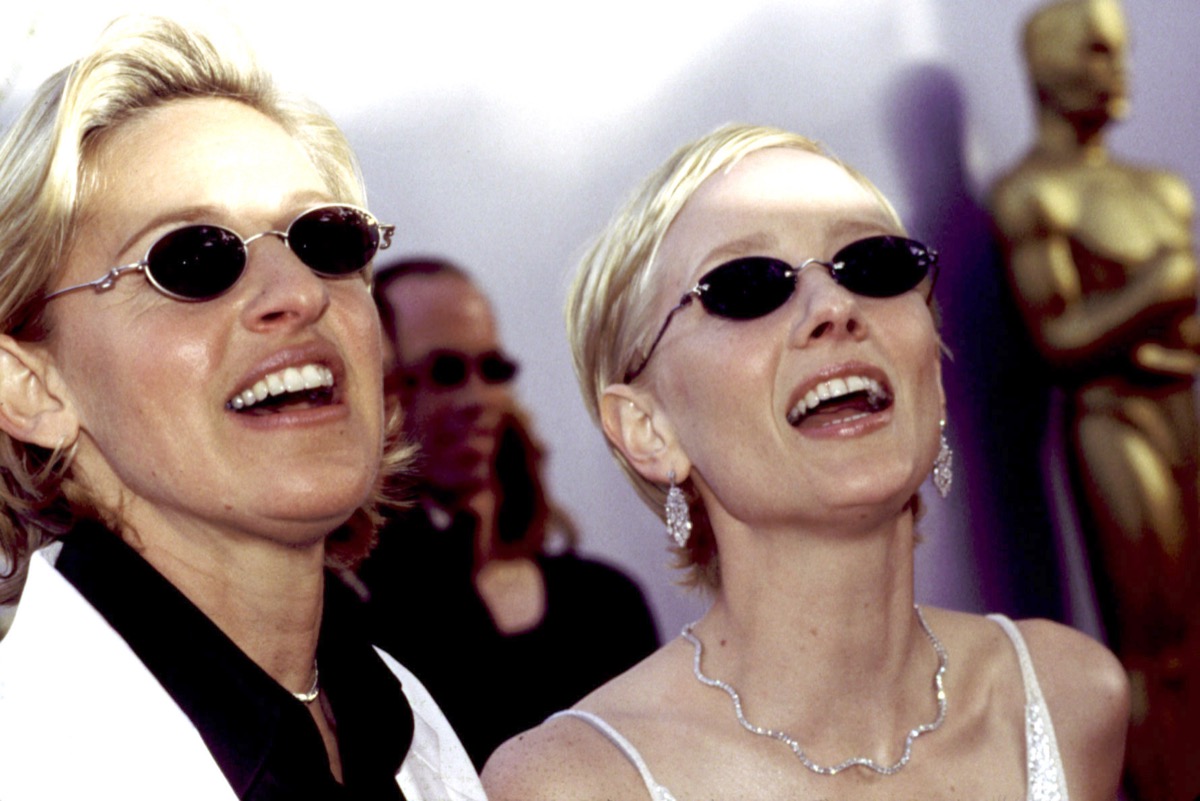
Yes, supermodels likeKendall Jenner andBella Hadid currently swear past the tiny sunglasses tendency. Only information technology's a resurgence, and a widely lambasted one, at that. Equally Ellen DeGeneres and her and so-girlfriend Anne Heche prove here, in the mid-1990s, these tiny sunglasses were no snazzier, coming in horrific tints like blue, pink, and yellow. No, thank you!
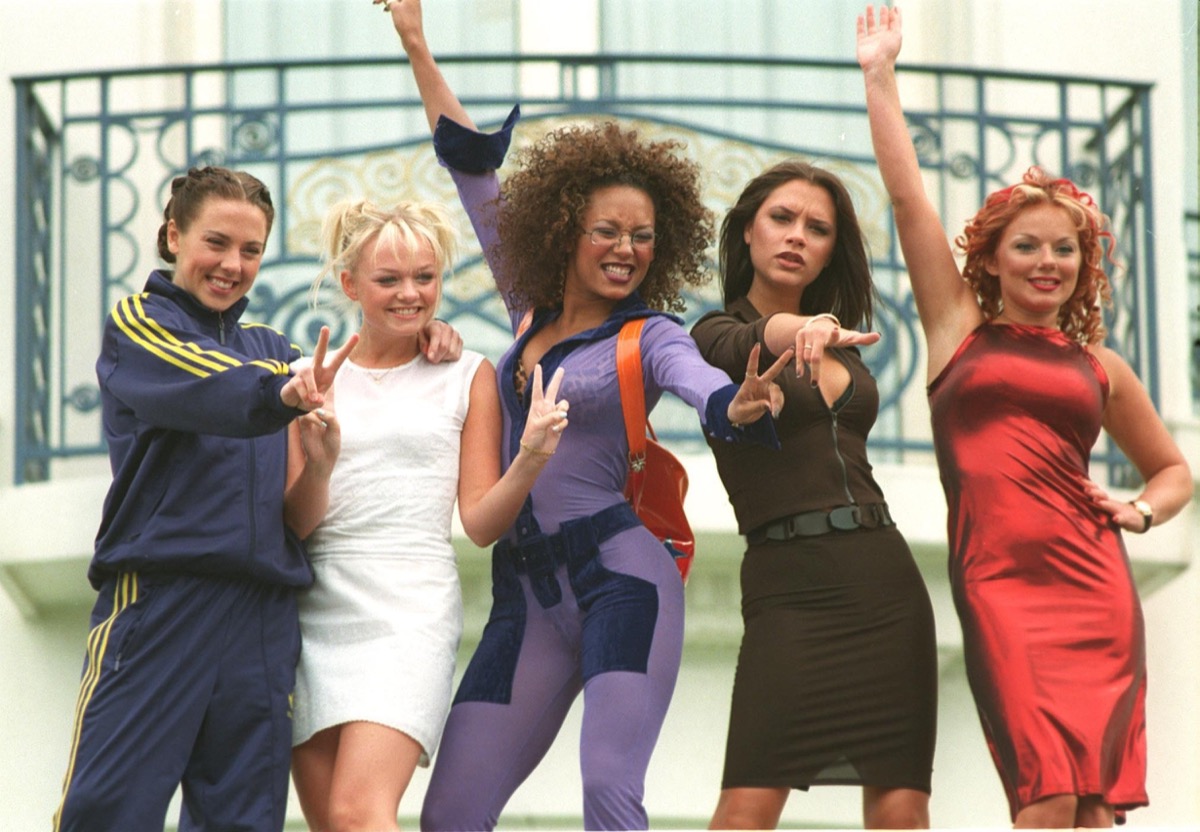
Athleisure had another major moment in the mid-'90s. Anybody fromMissy Elliot toAaliyah toMel Cof the Spice Girls (pictured here) wore Adidas'southward signature tri-striped rails suits. "Past the '90s, the tracksuit itself was entrenched both as an on-field athletic staple, too as a hip-hop icon," notes Complex. "While before decades focused on a slimmer fit, these renditions were cut with a relaxed silhouette, making them perfect for pre and post-game attire, simply also perfect for lounging around." Nosotros tin't hate on the comfort, but nosotros've luckily evolved since then.
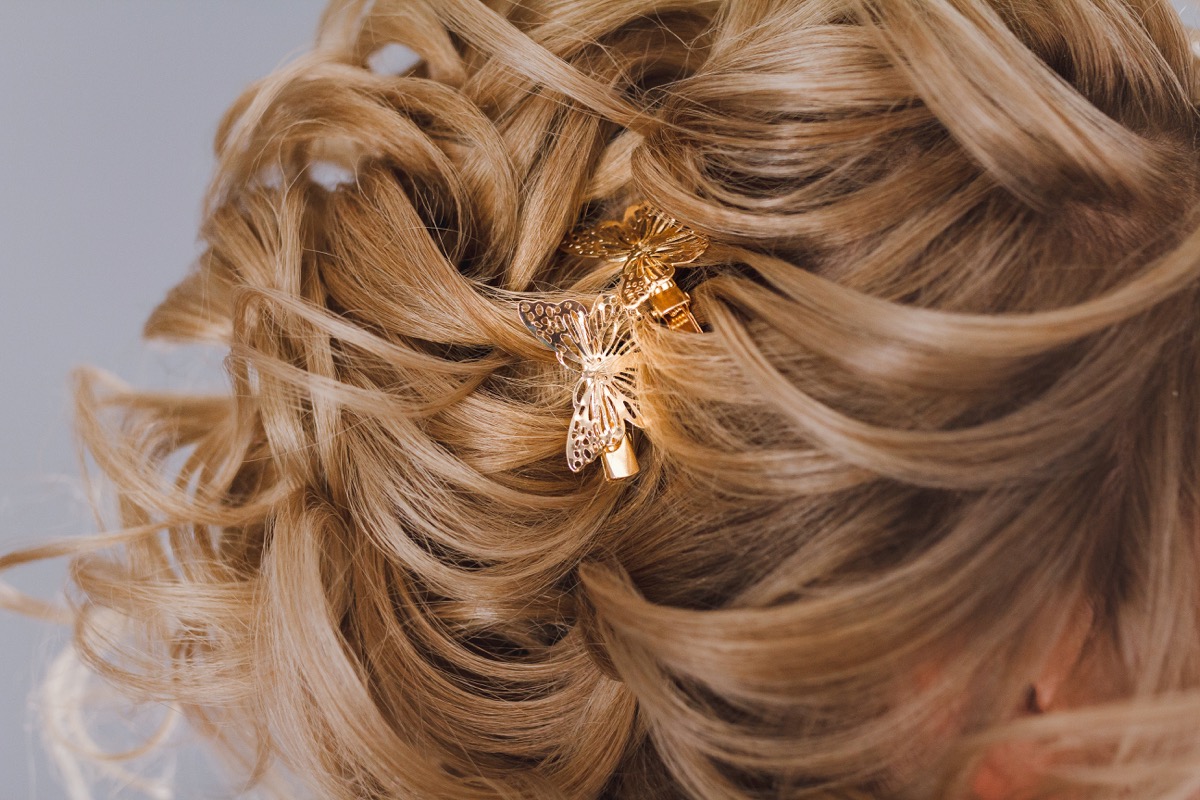
In the late 1990s, it wasn't enough to put your hair up in a ponytail or bun: You needed some sort of plastic clip to seal the deal. According to Bust, one pick was the ubiquitous claw clip, which allowed you to twist your locks up and secure it at the nape of your neck. The other—butterfly clips—were smaller and more ornamental than functional, property back tiny twists that lead to your updo du jour. It was, equallyTim Gunnwould say, a lot of wait.
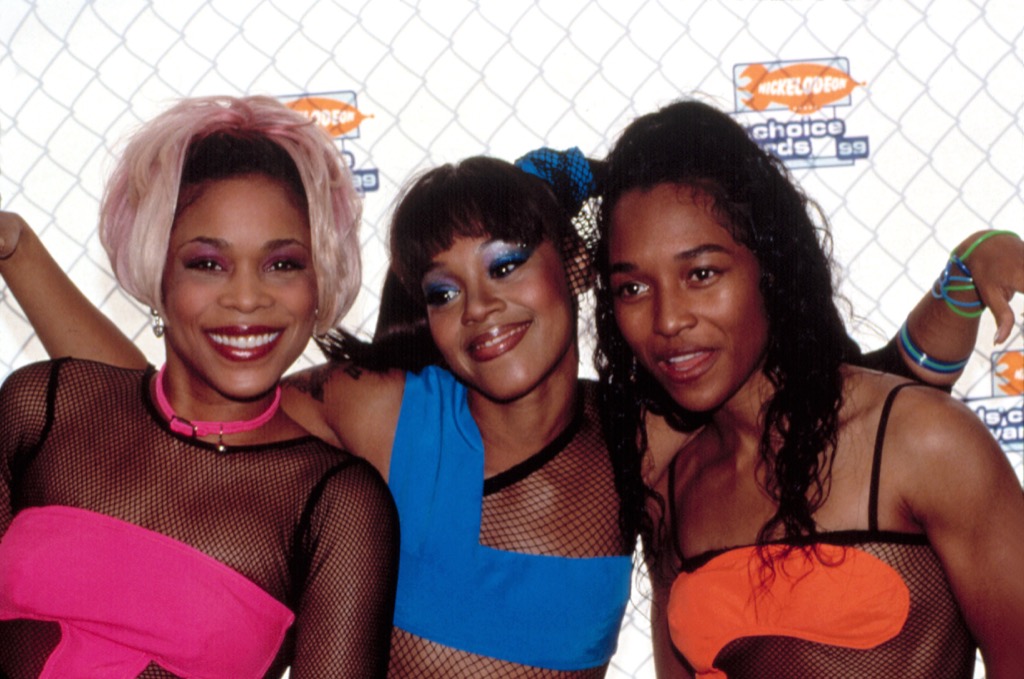
If you owned one blazon of necklace in the tardily '90s, it would take been a choker (like T-Boz'due south pictured here on the left). Whether it was plain black, made of stretchy material to wait similar a tattoo, or a ribbon with a cameo hanging off the middle, chokers were the accompaniment at the terminate of the decade, according to Cosmopolitan.
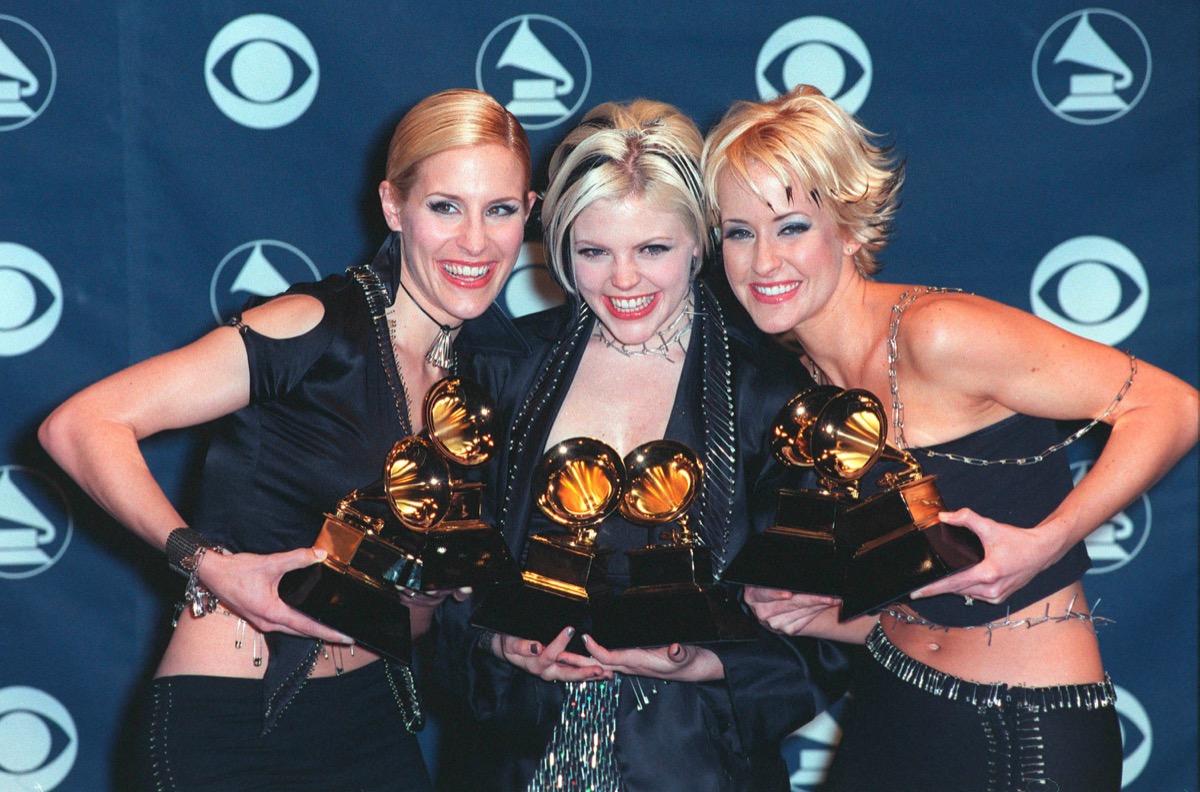
In the twelvemonth 2000—and, sadly, for the few years that followed—ultra-depression-ascent jeans were everywhere, including on Grammy winners the Dixie Chicks, pictured here. Paired with safety pin belts and shirts that barely grazed belly buttons, when it came to denim, the lower the meliorate. And now, co-ordinate to Glamour, they're on the brink of returning. Will we ever acquire?! If you want to encounter why nosotros certainly won't, be sure to check out these 20 Modern Way Trends Guaranteed to Make United states Cringe in 20 Years.
0 Response to "Ridiculous Fashion From Late 70s Early 80s What Brand of Shoes Was in in the Late 70s"
Post a Comment